

Small Business Budgeting Tips in 2026: Complete Guide
Managing money effectively can make the difference between a small business that simply survives and one that grows with confidence. Small Business Budgeting Tips in 2026 are especially valuable because today’s entrepreneurs often have to manage changing customer demand, digital advertising costs, software subscriptions, labor expenses, inventory, taxes, and unexpected operating costs.
A business budget gives you a practical financial roadmap. It helps you estimate how much money is coming in, how much is going out, which expenses deserve attention, and whether your current plans are financially realistic. The U.S. Small Business Administration recommends maintaining organized financial records and understanding revenue, expenses, assets, liabilities, cash flow, and financial projections as part of effective business management.

Why Small Business Budgeting Tips in 2026 Matter More Than Ever:
One of the most important Small Business Budgeting Tips in 2026 is to stop thinking of a budget as simply a list of expenses. Your budget should help you make business decisions.
For example, a budget can help you determine whether you can afford to hire an employee, launch a new marketing campaign, purchase equipment, increase inventory, move into a larger office, or invest in new technology.
A business may also appear profitable while experiencing cash shortages. Revenue and profit are not the same thing as cash available in the bank. Recent SBA guidance on cash-flow management specifically emphasizes that profitable businesses can still encounter cash shortages when the timing of incoming and outgoing money does not match.
A good budget therefore looks beyond sales. It considers timing, obligations, reserves, and future financial needs.
Small Business Budgeting Tips in 2026: Start With Accurate Financial Records
The first of the Small Business Budgeting Tips in 2026 is to organize your financial records before building your budget.
You need reliable information about your current financial position. Gather bank statements, credit-card statements, invoices, receipts, payroll records, subscriptions, loan payments, tax records, inventory costs, and other financial documents.
Separate personal and business finances wherever possible. Mixing personal expenses with business transactions can make it difficult to understand your actual business performance.
The SBA and its resource partners continue to emphasize organized bookkeeping, separation of personal and business finances, and financial statements as foundations for sound financial management.
Your basic records should allow you to determine:
- Total monthly revenue
- Fixed expenses
- Variable expenses
- One-time expenses
- Debt payments
- Taxes
- Cash available
- Outstanding invoices
- Accounts payable
Once this information is organized, your budget becomes much more realistic.
Understand Revenue Before Creating Your Business Budget:
One of the most useful Small Business Budgeting Tips in 2026 is to avoid guessing your income. Start your revenue forecast using historical performance, current customers, pricing, seasonality, market conditions, and realistic assumptions.
For an established company, look at the previous 12 months and identify patterns. Perhaps sales increase during the holiday season, decline during certain months, or fluctuate according to customer contracts.
For a new business, forecasting is more difficult. Start with conservative assumptions rather than assuming your business will immediately reach its ideal sales target.
For example, imagine an online service business expects to sell:
50 basic packages at $100 = $5,000
20 premium packages at $250 = $5,000
Total projected monthly revenue = $10,000
The owner should then compare that expected revenue against operating expenses and cash requirements.
SCORE financial-projection guidance recommends using business knowledge, industry information, historical data where available, sales forecasts, expense forecasts, and cash-flow projections to create realistic financial projections.
Small Business Budgeting Tips in 2026: Separate Fixed and Variable Costs
A simple way to understand your business expenses is to divide them into fixed and variable costs.
Fixed costs generally remain relatively stable regardless of sales volume. Examples can include rent, certain software subscriptions, insurance, salaries, and loan payments.
Variable costs generally change according to business activity. Examples include shipping, packaging, raw materials, transaction fees, sales commissions, and some forms of advertising.
This distinction makes expense management much easier.
Suppose your monthly fixed expenses are $4,000 and your variable costs average $2,000. If revenue decreases, you need to understand which expenses can be reduced and which cannot.
The SBA recommends organizing startup and operating expenses and distinguishing one-time costs from ongoing monthly costs when planning business finances.
Create a Monthly and Annual Business Budget:
Another practical recommendation among Small Business Budgeting Tips in 2026 is to have both a monthly and annual view of your finances.
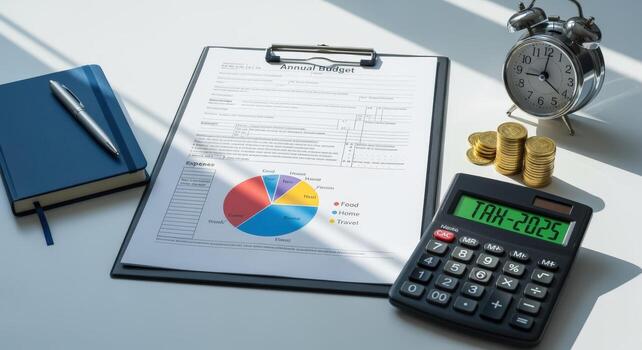
Your annual budget provides the big picture. It can show expected yearly revenue, expenses, profit, taxes, investments, and financial goals.
Your monthly budget is more useful for daily management.
A simple monthly budget can include:
- Expected Revenue
- Cost of Goods Sold
- Payroll
- Marketing
- Technology
- Rent and Utilities
- Insurance
- Professional Services
- Taxes
- Debt Payments
- Emergency Reserve
- Expected Profit
At the beginning of each month, compare your budget with actual figures from the previous month. This creates a budget variance analysis, which helps identify where your assumptions were inaccurate.
If your advertising budget was $1,000 but you spent $1,600, determine why. Perhaps sales increased enough to justify the additional spending, or perhaps the campaign was inefficient.
Budgeting is not about preventing every deviation. It is about understanding why deviations happen.
Small Business Budgeting Tips in 2026: Build a Cash Flow Forecast
Cash flow forecasting is one of the most important financial practices for small businesses.
A cash flow forecast estimates how much money will enter and leave your business during a specific period. Unlike a profit-and-loss statement, it focuses on the timing of actual cash movements.
For example, suppose you send a $10,000 invoice in March but your customer pays in May. Your accounting records may show revenue earlier, but your bank account does not receive that cash until May.
At the same time, you might have rent, payroll, suppliers, and tax payments due in March and April.
This is why a business can be profitable on paper while experiencing a temporary cash shortage.
SBA guidance and current small-business financial education specifically emphasize cash-flow projections, identifying future shortages, managing accounts receivable and payable, and understanding the difference between profit and cash in the bank.
For many small businesses, a rolling 13-week cash forecast can be particularly helpful. SCORE has recently recommended a simple weekly cash forecast showing expected cash coming in, cash going out, and estimated ending balances.
Track Every Business Expense:
One of the easiest ways to improve financial management is to know where your money is going.
Small expenses can become surprisingly expensive when they repeat every month. Software subscriptions, cloud storage, online tools, advertising platforms, delivery fees, bank charges, and memberships can add up.
Create expense categories and review them regularly.
For example:
- Marketing: $800
- Software: $300
- Office: $500
- Operations: $1,200
- Professional services: $400
- Other: $300
Total = $3,500
Once expenses are categorized, you can decide which costs generate value and which can be reduced.
Do not automatically cut the cheapest expenses. Instead, evaluate expenses according to their contribution to revenue, productivity, customer satisfaction, or long-term growth.
Small Business Budgeting Tips in 2026: Set Realistic Spending Limits
Your budget should include specific spending limits for major categories.
For example, you might establish a monthly marketing budget of $1,500. That could include:
- $700 for paid advertising
- $300 for content creation
- $200 for email marketing
- $150 for design tools
- $150 for testing and miscellaneous marketing
The exact numbers will depend on your business.
The important concept is budget control. When each category has a defined limit, you are less likely to make impulsive purchases.
This does not mean every expense must remain frozen. A business should be able to adjust spending when opportunities or problems arise. However, changes should be intentional rather than accidental.
Use a Zero-Based Budgeting Approach Where Appropriate:
Zero-based budgeting is another useful concept among Small Business Budgeting Tips in 2026.
With this approach, you do not simply take last year’s budget and increase each category by 5% or 10%. Instead, you review each major expense and ask whether it is still necessary and valuable.
For example, your business may have three software subscriptions that were useful two years ago. Perhaps one is no longer needed. Reviewing every expense can uncover unnecessary spending.
Zero-based budgeting can be especially useful for businesses experiencing financial pressure or preparing for a major investment.
However, it does not mean every expense must be eliminated. Strategic spending on marketing, technology, training, equipment, or employees can help create future growth.
Create an Emergency Fund for Your Business:
Unexpected expenses can cause serious problems for businesses without cash reserves.
Equipment may break. A major customer may delay payment. Sales may temporarily decline. An unexpected legal, insurance, maintenance, or technology cost may appear.
An emergency business fund provides a financial cushion for unexpected situations.
The appropriate reserve varies significantly by industry and business model. A business with predictable recurring revenue may have different cash requirements from a seasonal company with high inventory costs.
Instead of choosing an arbitrary number, analyze your core monthly operating expenses and business risk.
The objective is to create enough liquidity to handle reasonable disruptions without immediately relying on expensive borrowing.

Small Business Budgeting Tips in 2026: Budget for Taxes
Taxes should never be an afterthought.
Depending on your location, legal structure, employees, sales activity, and other circumstances, your business may have different tax obligations. Keep tax planning separate from your general operating expenses and work with a qualified tax professional when needed.
One budgeting strategy is to set aside money regularly rather than waiting until a tax payment is due.
Maintain organized records for deductible expenses and keep business and personal transactions clearly separated.
Do not treat money reserved for taxes as available spending cash.
Because tax rules vary by jurisdiction and business structure, this area should always be reviewed with an appropriate accountant or tax adviser rather than relying on a generic percentage.
Review Your Pricing and Profit Margins:
Budgeting is not only about reducing costs. It is also about making sure your pricing supports your business.
A product that sells frequently may still be unprofitable if material, labor, shipping, transaction, advertising, and overhead costs are too high.
Calculate your profit margin and review it regularly.
For example:
Selling price = $100
Product cost = $40
Transaction and delivery costs = $10
Gross profit = $50
The $50 is not necessarily your final profit because the business still has overhead.
Review prices when supplier costs, labor costs, market conditions, or customer expectations change.
SCORE’s 2026 small-business planning guidance recommends reviewing true costs, including materials, labor, delivery, and fees, when evaluating pricing and profitability.
Small Business Budgeting Tips in 2026: Control Inventory Costs
For businesses selling physical products, inventory can consume significant amounts of cash.
Too much inventory ties up money that could be used for marketing, payroll, technology, or reserves. Too little inventory can lead to missed sales and unhappy customers.
Use historical sales data to identify your fastest-moving products and slow-moving inventory.
- Consider questions such as:
- Which products sell consistently?
- Which products have the highest margins?
- How long does inventory take to arrive?
- Which products are frequently discounted?
- How much inventory can the business comfortably afford?
Better inventory management helps protect cash flow while maintaining customer service.
Manage Accounts Receivable and Accounts Payable:
Cash-flow management becomes much easier when a business controls both money coming in and money going out.
Accounts receivable refers to money customers owe your business.
Accounts payable refers to money your business owes suppliers and other vendors.
Late customer payments can create cash shortages even when sales are strong. Establish clear payment terms, send invoices promptly, and follow up on overdue accounts.
At the same time, understand your vendor payment schedules. Avoid late fees, but also manage payment timing responsibly according to your agreements.
Recent SBA cash-flow guidance specifically highlights accounts receivable, accounts payable, payment terms, and timing as important parts of managing business cash flow.
Small Business Budgeting Tips in 2026: Use Budgeting Tools
You do not necessarily need expensive financial software to create a useful budget.
A small business can start with a spreadsheet containing columns for:
- Budgeted Amount
- Actual Amount
- Difference
- Percentage Difference
- Notes
As the business grows, accounting or financial-management software can reduce manual work.
Common categories of tools include accounting software, invoicing systems, payroll platforms, expense-tracking tools, and spreadsheet templates.
SBA-supported financial education has specifically noted that businesses can use a simple spreadsheet or commercial products such as accounting software when creating a budget.
Create a Break-Even Analysis:
A break-even analysis tells you how much you need to sell before total revenue covers total costs.
The basic formula for break-even units is:
Break-Even Point = Fixed Costs ÷ (Selling Price per Unit − Variable Cost per Unit)
For example, suppose:
Fixed costs = $5,000
Selling price = $100
Variable cost per unit = $40
Break-even point:
$5,000 ÷ ($100 − $40) = 83.33
You would therefore need approximately 84 units to cover the costs under these assumptions.
The SBA recommends break-even analysis as a tool for understanding when total revenue equals total costs and assessing the financial viability of a business.
Understanding break-even helps you set realistic sales targets.
Small Business Budgeting Tips in 2026: Set Financial Goals
A budget becomes more useful when it is connected to specific goals.
Instead of saying:
“I want to make more money.”
- Set measurable goals such as:
- Increase monthly revenue by 15%.
- Reach a 20% operating margin.
- Reduce unnecessary subscriptions by $300 per month.
- Build a three-month operating reserve.
- Reduce outstanding invoices older than 30 days.
- Invest $5,000 in business equipment by December.
These objectives create direction and make it easier to judge whether your budget is supporting your strategy.
Your financial goals should be realistic and connected to your broader small business growth strategy.
Review Your Budget Every Month:
Creating a budget once and never reviewing it defeats its purpose.
Schedule a financial review at least once a month. During the review, compare budgeted amounts with actual numbers.
Ask:
- Did revenue meet expectations?
- Which expenses exceeded the budget?
- Which expenses were lower than expected?
- Did cash flow improve?
- Are customers paying on time?
- Are margins changing?
- Do upcoming expenses require additional cash?
- Should spending priorities change?
A monthly review can identify small problems before they become large financial issues.
For seasonal businesses, you may need more frequent reviews during high-volume periods.
Small Business Budgeting Tips in 2026: Avoid Common Budgeting Mistakes
Many small businesses encounter similar budgeting problems.
The first mistake is being overly optimistic about revenue. Use realistic assumptions and consider a conservative scenario.
The second is ignoring small recurring expenses. Several $20 or $50 monthly subscriptions can become thousands of dollars per year.
The third is confusing profit with cash flow. A profitable business can still experience cash shortages because of payment timing.
The fourth is failing to budget for taxes and irregular expenses.
The fifth is making a budget so complicated that you stop using it.
Finally, avoid using your budget only when something goes wrong. A budget should be a regular management tool, not an emergency document.
Create Three Financial Scenarios for Your Business:
A useful approach in Small Business Budgeting Tips in 2026 is to prepare multiple financial scenarios.
Best-Case Scenario
This assumes strong sales and favorable conditions. It can help you plan for growth and investment.
Expected Scenario
This represents the most realistic outcome based on available evidence and reasonable assumptions.
Worst-Case Scenario
This considers weaker sales, higher costs, delayed payments, or another reasonable business setback.
The purpose of the worst-case scenario is not to create fear. It allows you to prepare before a difficult period occurs.
For example, if sales fall by 20%, you should know which expenses could be delayed, reduced, or eliminated and how much cash reserve would remain.
A Simple 12-Month Budgeting Strategy for 2026:
A practical annual approach can make financial management easier.
- January: Review previous-year performance and establish financial targets.
- February–March: Review operating expenses and eliminate unnecessary recurring costs.
- April–June: Evaluate marketing ROI, pricing, margins, and cash flow.
- July–September: Update financial projections based on actual performance.
- October–November: Prepare for seasonal expenses and review tax planning with your adviser.
- December: Close the year, review performance, identify lessons, and build the next annual budget.
This schedule can be adapted to your business cycle. The important part is maintaining a regular financial review process.
Call to Action: Apply These Small Business Budgeting Tips in 2026
The best Small Business Budgeting Tips in 2026 are not necessarily the most complicated ones. They are the habits that help you understand your money and make better decisions consistently.
Start by organizing your financial records, separating business and personal finances, tracking revenue and expenses, creating a monthly budget, and building a cash-flow forecast. Then add more advanced practices such as scenario planning, break-even analysis, margin analysis, and detailed forecasting as your business grows.
Ready to take control of your business finances? Create your 2026 budget today, identify your biggest expense categories, set realistic revenue goals, and review your actual results every month. Small financial improvements made consistently can create a stronger foundation for long-term business growth.
Closing Thoughts:
Following Small Business Budgeting Tips in 2026 can help entrepreneurs move from reactive financial decisions to proactive business management. A budget gives you visibility into revenue, expenses, cash flow, profitability, and future financial requirements. More importantly, it allows you to recognize problems earlier and make decisions with greater confidence.
The strongest budget is not the one with the most complicated formulas. It is the one that reflects realistic business conditions and is reviewed regularly. Track what you actually spend, compare those numbers with your expectations, investigate major differences, and adjust your assumptions as you learn more about your business.
Cash flow should receive special attention. Current small-business financial guidance continues to emphasize forecasting cash inflows and outflows, monitoring receivables and payables, preparing for fluctuations, and maintaining sufficient liquidity.
Finally, remember that budgeting is not simply about spending less. It is about spending intelligently. The right investment in marketing, employees, technology, inventory, training, or equipment can contribute to growth when it is financially justified. By combining careful budgeting with realistic forecasting and regular financial reviews, a small business can build a healthier financial foundation for 2026 and beyond.
FAQs About Small Business Budgeting Tips in 2026:
What are the most important Small Business Budgeting Tips in 2026?
The most important practices include tracking revenue and expenses, separating fixed and variable costs, forecasting cash flow, setting spending limits, budgeting for taxes, maintaining financial records, creating cash reserves, and reviewing actual results against the budget every month.
How much should a small business have in emergency savings?
There is no single amount that works for every small business. The appropriate reserve depends on monthly operating costs, revenue stability, seasonality, debt, inventory requirements, and business risk. Start by calculating your essential monthly expenses and determine how much liquidity would help your business withstand a reasonable disruption.
What is the difference between a business budget and a cash-flow forecast?
A business budget estimates expected revenue and expenses over a period, while a cash-flow forecast focuses on the timing of cash entering and leaving the business. Both are important because profit and cash availability are not always the same.
Can I create a small business budget using Excel or Google Sheets?
Yes. A spreadsheet can be an effective starting point for a simple business budget. SBA-supported business education specifically identifies spreadsheets as one possible budgeting method alongside commercial accounting products.
How often should a small business review its budget?
Monthly reviews are a practical minimum for many businesses. Businesses with unpredictable revenue, seasonal sales, or tight cash flow may benefit from weekly cash-flow monitoring and more frequent financial reviews.
Why is cash flow important for small businesses?
Cash flow shows when money actually enters and leaves your business. A company can have profitable sales but still face difficulties if customers pay late while payroll, suppliers, rent, taxes, or other expenses must be paid immediately.
What expenses should a small business include in its budget?
Include payroll, rent, utilities, inventory, supplies, marketing, software, insurance, professional services, taxes, loan payments, transaction fees, maintenance, and other recurring or one-time costs relevant to your business. The SBA recommends identifying and organizing both one-time and ongoing expenses when assessing business costs.

Naeem Iqbal is the founder and lead writer at SmartWebCreator.org, a resource dedicated to helping aspiring entrepreneurs launch profitable small businesses on a budget of $1,000 or less. With a focus on practical, research-backed guidance, Naeem Iqbal researches real-world startup costs, regulatory requirements, and growth strategies across dozens of low-investment business models — from food service to home-based ventures.
Every guide on SmartWebCreator.org is written to help beginners avoid costly mistakes, understand legal requirements, and build a realistic path from idea to income — without needing a large upfront investment.
📧 Contact: webcreator2474@gmail.com
🌐 Website: smartwebcreator.org



Pingback: Best Free Budget Templates
Pingback: Budget Variance Analysis