
How to Start a BBQ Business Under $1000
BBQ Business Under $1000 can be an exciting opportunity for anyone who enjoys cooking, serving people, and building a food brand. From smoked brisket and pulled pork to ribs, chicken, sausages, and homemade sides, BBQ has a loyal customer base across the United States.
The biggest challenge for a new entrepreneur is usually the cost. A traditional restaurant, commercial kitchen, or food truck can require a substantial investment. However, starting a BBQ business on a budget becomes much more realistic when you begin with a small, focused business model rather than trying to open a full-scale restaurant immediately.
With a budget of around $1,000, you can potentially begin with a small catering, pop-up, pre-order, event, or permitted food-service model, depending on your location and applicable regulations. Your exact requirements will vary by state, county, and city. The U.S. Small Business Administration notes that licenses and permits depend on the business activity and location, while food-service requirements are commonly regulated at state and local levels.
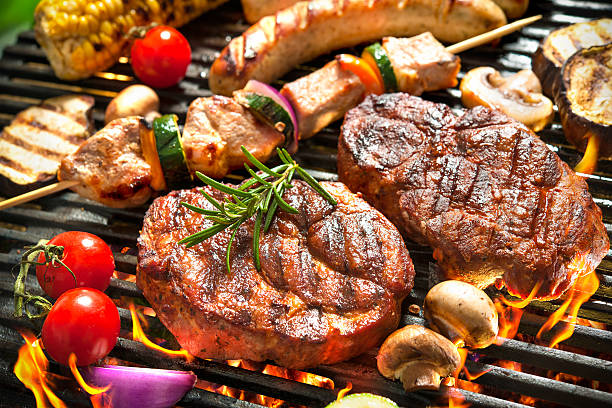
How to Start a BBQ Business Under $1000 With the Right Business Model (BBQ Business):
The first decision is choosing the type of BBQ business you want to operate. Your business model will determine your equipment, permits, food costs, marketing strategy, and potential revenue.
When working with a $1,000 budget, avoid starting with a restaurant or expensive food truck. Instead, consider a smaller model such as:
Pre-Order Sales (BBQ Food Business):
A pre-order BBQ business allows customers to place orders before your cooking day. You then purchase ingredients based on confirmed demand, prepare the food, and arrange pickup or delivery where legally permitted.
This model can reduce food waste and help you manage cash flow.
Small Catering Events (BBQ Catering Business):
You can focus on birthdays, family gatherings, office lunches, graduation parties, community events, and small celebrations.
Rather than purchasing equipment for large events immediately, start with smaller orders that match your available equipment and capacity.
Pop-Ups and Local Events (BBQ Pop-Up):
A permitted pop-up can allow you to test your food and brand without committing to a permanent location. Before participating, confirm the event’s requirements and your local health department rules.
The FDA Food Code is a model used by jurisdictions to develop food-safety regulations, but the actual requirements applicable to your business depend on the authorities in your area.
How to Start a BBQ Business With a $1000 Startup Budget (Small Food Business Under $1000):
Your $1,000 budget needs to be carefully divided. The SBA recommends calculating startup expenses before launching because understanding costs can help you estimate profitability and determine how much funding you actually need.
A sample budget could look like this:
| Expense | Estimated Budget |
|---|---|
| BBQ smoker or suitable cooking equipment | $300–$400 |
| Basic utensils and food-safe supplies | $75–$100 |
| Initial meat and ingredients | $150–$200 |
| Packaging and serving supplies | $75–$100 |
| Branding and printed materials | $30–$50 |
| Basic website/domain or online tools | $30–$50 |
| Initial marketing | $50–$100 |
| Business/permit reserve | $100–$200 |
Your actual expenses could be significantly different depending on your location, equipment, existing supplies, and regulatory requirements.
The key is not to spend the entire $1,000 on equipment. Keep some money available for ingredients, packaging, permits, unexpected expenses, and marketing.
If you already own a suitable smoker, grill, refrigerator, or food-preparation equipment, your initial investment could be considerably lower.
Researching Local Food Regulations (BBQ Permits and Licenses):
This is one of the most important parts of learning how to start a BBQ business. You should determine what is legally required before selling food.
Requirements can vary significantly depending on your state, county, and city. The SBA states that licenses and permits vary according to business activity and location, and restaurants, retail food businesses, and vending operations are among activities commonly regulated locally.
You may need some combination of:
- Business registration
- Local business license
- Food establishment permit
- Temporary food establishment permit
- Food-handler training
- Food-safety certification
- Fire or outdoor cooking approval
- Commercial kitchen approval
- Sales tax registration where applicable
- Liability insurance
Do not assume that because you are operating from home, you automatically qualify to prepare and sell BBQ from your residential kitchen.
Meat-based BBQ can involve food-safety requirements that differ from shelf-stable or low-risk foods. Contact your local health department before purchasing equipment or advertising your first sale.
The FDA’s food establishment plan-review guidance emphasizes reviewing food-service operations and equipment before construction or purchasing major equipment, which can help prevent expensive mistakes.
Small but Profitable Menu (BBQ Menu Ideas):
One of the easiest ways to control costs is to avoid creating a huge menu.
A beginner-friendly BBQ menu could include:
- Pulled pork
- BBQ chicken
- Smoked sausage
- Ribs
- Brisket
- Coleslaw
- Baked beans
- Mac and cheese
- Cornbread
- Potato salad
- BBQ sauce
You do not need to offer every item on your first day.
Instead, choose two or three main proteins and two or three sides. A smaller menu makes purchasing, preparation, cooking, packaging, and quality control easier.
For example, you could create a weekend BBQ box containing:
Main: Pulled pork or smoked chicken
Sides: Coleslaw and baked beans
Extra: Homemade BBQ sauce and cornbread
Once you understand which products customers prefer, you can expand the menu.

Signature Product (BBQ Food Business):
A signature product can help distinguish your brand from competitors.
You might specialize in:
- Texas-style brisket
- Carolina-style pulled pork
- Kansas City-style BBQ
- Smoked chicken
- BBQ ribs
- Gourmet BBQ sandwiches
- BBQ family meal boxes
Instead of competing with every BBQ restaurant in your area, create a recognizable identity around one or two standout products.
Calculating Food Costs and Pricing (BBQ Pricing Strategy):
Pricing is one of the most important parts of a profitable BBQ business.
Do not calculate your price based only on the cost of meat.
Your total food cost can include:
- Meat
- Seasonings
- BBQ sauce
- Vegetables
- Side dishes
- Cooking fuel
- Packaging
- Disposable utensils
- Delivery supplies
- Payment processing fees
- Waste
For example, imagine a BBQ meal costs you $6 in ingredients and packaging. Selling it for $7 may leave very little room for labor, fuel, marketing, taxes, equipment, and other expenses.
Instead, calculate your total cost per serving and establish a price that gives your business room to operate.
A simple formula is:
Selling Price − Total Variable Cost = Gross Profit
Track your actual costs after every event. Meat prices can fluctuate, so review your pricing regularly.
For catering, consider package pricing rather than charging only by individual plate.
For example:
- Small BBQ Package: Serves 10–15 people
Family Package: Serves 20–25 people
Event Package: Serves 40–50 people
Your packages can include a main protein, sides, sauces, serving supplies, and optional upgrades.
Creating a Strong Brand (BBQ Business Branding):
A memorable brand can make a small BBQ business look more professional.
Start with:
- A memorable business name
- Simple logo
- Consistent colors
- Attractive food photography
- Professional menu
- Social media profiles
- Business phone number
- Website or landing page
Your name should be easy to remember and relevant to your BBQ concept.
Avoid creating a brand that is too complicated. Customers should immediately understand that you sell BBQ.
Your packaging can also become part of your branding. Even simple stickers or labels with your business name and social media handle can help customers remember you.
Social Media Marketing (BBQ Marketing Ideas):
Social media can be one of the most affordable marketing tools for a new BBQ business.
Food is naturally visual, which makes BBQ particularly suitable for platforms such as Instagram, Facebook, TikTok, and YouTube.
Create content showing:
- Meat coming off the smoker
- BBQ slicing videos
- Smoke rising from the grill
- Behind-the-scenes preparation
- Customer orders
- BBQ meal boxes
- Before-and-after cooking shots
- New menu items
- Customer reviews
- Weekend specials
Short videos can be especially effective because they show the cooking process and make potential customers hungry.
Instead of posting only “Buy now,” provide content that demonstrates quality and personality.
For example:
“12 hours of smoking, one unforgettable brisket.”
This type of content can tell your brand story while promoting your product.
Get Your First Customers (BBQ Catering Business):
Your first customers may come from people who already know and trust you.
Start by promoting your business to your existing network, while following all applicable solicitation and food-service rules.
You can also build customers through:
- Local community groups
- Business networking
- Office catering
- Birthday parties
- Sports events
- Local markets
- Community events
- Referral programs
- Social media
- Local search listings
Ask satisfied customers to leave honest reviews where appropriate.
A referral strategy can also be powerful. For example, you might offer an approved promotional incentive for customers who refer a new catering client.
The objective is to turn your first customers into repeat customers.
Buying a Food Truck (BBQ Food Truck Alternative):
A food truck can sound attractive, but it can require much more capital than a $1,000 startup budget allows.
Instead, start with a lower-cost model and prove demand first.
You could eventually use your profits to move toward:
- Pre-order BBQ
- Small catering
- Local events
- Larger catering contracts
- Commercial kitchen
- Food trailer or food truck
- Permanent BBQ restaurant
This gradual approach can reduce the amount of money you risk before knowing whether customers want your product.
Online Ordering (Online BBQ Business):
An online ordering system can make your operation more convenient.
Your website or ordering page should clearly display:
- Menu
- Prices
- Pickup information
- Delivery availability
- Order deadlines
- Catering options
- Contact information
- Payment methods
You can also create a weekly preorder schedule.
For example:
Orders open Monday–Thursday.
Cooking Friday.
Pickup Saturday.
This gives you predictable demand and allows you to purchase ingredients more efficiently.

Maintaining Food Safety (Food Safety for BBQ):
Food safety should be a core part of your BBQ business, not an afterthought.
BBQ businesses work with potentially hazardous foods such as meat, so safe preparation, storage, cooking, holding, cooling, and transportation are critical.
Follow the requirements provided by your local health authority and use appropriate food-safety procedures.
The FDA Food Code provides model requirements for protecting public health and is adopted or adapted by state and local jurisdictions.
Keep your preparation area clean and organized, use food-safe equipment, prevent cross-contamination, monitor temperatures, and maintain appropriate storage practices.
If you are unsure whether your proposed home kitchen, smoker, vehicle, or event setup is permitted, contact your local regulatory authority before selling.
Track Your Profits (BBQ Business Plan):
Revenue alone does not tell you whether your BBQ business is profitable.
Track:
- Total sales
- Food costs
- Packaging costs
- Fuel
- Permit fees
- Marketing
- Delivery
- Equipment
- Payment fees
- Other operating expenses
Suppose you sell $1,500 worth of BBQ during a month. That does not mean you made $1,500 in profit.
After subtracting all business expenses, your actual profit could be considerably lower.
The SBA recommends calculating startup costs and using those figures to estimate profits and break-even points.
Create a basic spreadsheet and update it every week.
How to Start a BBQ Business and Grow Beyond $1000 (BBQ Business Growth):
Once your business begins generating consistent sales, reinvest carefully.
You could use profits to purchase:
- Better smoker
- Additional cooking equipment
- Food-safe storage
- Professional packaging
- Better signage
- Website improvements
- Photography
- Advertising
- Catering equipment
You can also increase revenue by introducing:
- Corporate catering
- Wedding catering
- Birthday catering
- Sports-event catering
- BBQ meal subscriptions
- Holiday BBQ packages
- Family meal boxes
- Private events
The objective is not simply to sell more food. It is to build a repeatable business system that can handle increasing demand without sacrificing quality.
Common Mistakes to Avoid When Learning How to Start a BBQ Business (BBQ Business Mistakes):
New BBQ entrepreneurs often make several avoidable mistakes.
How to Start a BBQ Business Without Overspending [Startup Costs]
Do not spend your entire budget on a smoker or branding before validating demand.
How to Start a BBQ Business Without Ignoring Permits [BBQ Permits]
Never assume that a home-based food business automatically allows you to sell smoked meat. Check local requirements first.
How to Start a BBQ Business Without Offering Too Many Menu Items [BBQ Menu]
A huge menu can increase inventory, waste, preparation time, and operational complexity.
How to Start a BBQ Business Without Underpricing Your Food [BBQ Pricing]
Low prices may attract customers but can make the business unsustainable if they do not cover your actual costs.
How to Start a BBQ Business Without Sacrificing Quality [BBQ Food Quality]
Consistency matters. Customers should receive the same quality every time they order.
Is It Possible to Start a BBQ Business Under $1000? (Small Food Business Under $1000):
Yes, it can be possible to start a BBQ business under $1,000, but the type of business you can realistically launch depends heavily on your location, equipment, permits, and operating model.
A $1,000 budget is more suitable for a lean operation such as permitted small-scale catering, preorders, pop-ups, or events than for a restaurant or fully equipped food truck.
Your first goal should be proving that people will consistently pay for your BBQ.
Once demand is established, reinvest profits instead of taking on unnecessary expenses.
Remember that the cost of business registration itself varies. The SBA states that registration costs depend on state and business structure, and local licensing and permitting costs vary as well.
Closing Thoughts: BBQ Business Under $1000
Learning how to start a BBQ business does not mean you have to open a restaurant or purchase an expensive food truck on day one. A smarter approach for many beginners is to start small, validate demand, understand local regulations, control food costs, and reinvest your profits.
Your first $1,000 should be treated as a launch budget, not an invitation to spend everything immediately. Build a simple menu, create a recognizable BBQ brand, develop reliable cooking processes, and focus on delivering excellent customer experiences.
Most importantly, verify your local food-service requirements before selling. The SBA makes clear that licensing and permit requirements vary by location and business activity, while FDA food-safety guidance provides a model framework that states and local jurisdictions may adopt or modify.
If customers love your food and your numbers make sense, you can gradually move from small preorders to catering, larger events, corporate clients, and eventually a food trailer, truck, or restaurant.
The goal is simple: start lean, cook consistently, serve safely, understand your numbers, and grow when the demand justifies it.
Call to Action: BBQ Business Under $1000
Ready to turn your BBQ skills into a business?
Start by researching your local food-service regulations, choosing your BBQ business model, calculating your startup costs, and creating a small menu. Then test your concept with a legally permitted sales channel and collect genuine customer feedback.
You do not need to build a massive BBQ operation overnight. Start with what your budget and local regulations allow, prove your concept, and reinvest your profits into sustainable growth.
Take the first step today and build your BBQ business under $1000 with a smart, practical plan.
Important Article For Your Knowledge:
Frequently Asked Questions:
How to Start a BBQ Business With $1,000?
Start with a lean business model such as preorders, small permitted catering jobs, or local events. Prioritize essential cooking equipment, ingredients, packaging, permits, and basic marketing rather than a restaurant or food truck.
How to Start a BBQ Business From Home?
First determine whether your state and local health authorities allow the proposed BBQ operation from your home. Meat-based food businesses can have specific food-safety and facility requirements, so verify the rules before preparing food for sale.
How to Start a BBQ Business Without a Food Truck?
Begin with catering, preorders, pop-ups, or permitted event sales. Once demand grows, you can reinvest profits into a trailer or food truck if that model makes financial sense.
What Equipment Do I Need to Start a BBQ Business?
Depending on your business model, you may need a suitable smoker or grill, food-safe preparation equipment, thermometers, storage containers, coolers, utensils, packaging, cleaning supplies, and approved food-service equipment.
Is a BBQ Business Profitable?
A BBQ business can be profitable when food costs, labor, fuel, packaging, permits, marketing, and other expenses are controlled while prices provide enough margin. Profitability depends on demand, location, menu, pricing, and operational efficiency.
What Should I Sell at a BBQ Business?
Popular options include brisket, pulled pork, ribs, chicken, sausage, sandwiches, BBQ meal boxes, family meals, and sides such as baked beans, coleslaw, mac and cheese, and cornbread.

Naeem Iqbal is the founder and lead writer at SmartWebCreator.org, a resource dedicated to helping aspiring entrepreneurs launch profitable small businesses on a budget of $1,000 or less. With a focus on practical, research-backed guidance, Naeem Iqbal researches real-world startup costs, regulatory requirements, and growth strategies across dozens of low-investment business models — from food service to home-based ventures.
Every guide on SmartWebCreator.org is written to help beginners avoid costly mistakes, understand legal requirements, and build a realistic path from idea to income — without needing a large upfront investment.
📧 Contact: webcreator2474@gmail.com
🌐 Website: smartwebcreator.org

Pingback: Small Business Marketing Agency
Pingback: Life Coaching Business Online