
What Is an Enterprise and What Is Its Resource Planning? Complete Guide

Understanding What Is an Enterprise and What Is Its Resource Planning is essential for business owners, entrepreneurs, managers, and students in 2026. As businesses continue adopting digital technologies, Enterprise Resource Planning (ERP) systems have become one of the most valuable tools for managing operations efficiently.
Whether you operate a startup, a small business, or a multinational corporation, an ERP system helps centralize information, automate daily processes, improve communication, and support better decision-making. Instead of relying on multiple disconnected software applications, businesses can manage finance, inventory, sales, customer relationships, human resources, and production from a single integrated platform.
What Is an Enterprise and What Is Its Resource Planning? Understanding the Basics:
An enterprise is any organization or business established to produce goods, provide services, or achieve specific commercial objectives. Enterprises range from small family-owned businesses to global corporations with thousands of employees.
Enterprise Resource Planning (ERP) is a business management system that integrates multiple departments into one centralized platform. Instead of each department using separate software, ERP connects them through a shared database.
Typical ERP modules include:
- Finance and accounting
- Human resources
- Inventory management
- Procurement
- Sales and marketing
- Manufacturing
- Supply chain management
- Customer relationship management (CRM)
By integrating these departments, ERP eliminates duplicate work, improves collaboration, and provides real-time business insights.
Why What Is an Enterprise and What Is Its Resource Planning Matters for Modern Businesses:
Modern businesses generate large volumes of information every day. Managing this information manually or across multiple disconnected systems often leads to errors, delays, and poor decision-making.
Understanding What Is an Enterprise and What Is Its Resource Planning helps organizations recognize how ERP software streamlines operations and improves productivity.
Businesses using ERP systems can:
- Access real-time business data
- Improve employee collaboration
- Reduce manual paperwork
- Automate repetitive tasks
- Increase operational efficiency
- Improve customer satisfaction
- Make better financial decisions
- Scale operations more effectively
As businesses grow, ERP becomes increasingly valuable because it provides a single source of accurate information across the organization.
Key Components of What Is an Enterprise and What Is Its Resource Planning:
An ERP system consists of several integrated modules that work together to support different business functions.
Financial Management (Enterprise Resource Planning):
The finance module tracks income, expenses, invoices, budgets, tax reporting, payroll, and financial statements. It helps organizations maintain accurate financial records while supporting compliance and better financial planning.
Human Resource Management (Business Resource Planning):
HR modules simplify employee management by handling recruitment, attendance, payroll, leave requests, employee performance, training, and benefits administration.
This reduces administrative work while improving employee experience.
Inventory Management (ERP Software):
Inventory management helps businesses monitor stock levels, warehouse operations, product availability, and purchasing activities.
Benefits include:
- Preventing stock shortages
- Reducing overstocking
- Improving warehouse efficiency
- Better inventory forecasting
Sales and Customer Management (Enterprise Management System):
Sales modules allow businesses to manage customer information, quotations, invoices, sales orders, customer support, and order fulfillment.
Integrated CRM capabilities improve customer relationships while increasing sales efficiency.
Procurement and Supply Chain (Business Process Management):
Procurement modules help businesses purchase materials from suppliers, manage purchase orders, monitor supplier performance, and optimize inventory replenishment.
A well-managed supply chain reduces costs and improves delivery performance.
Major Benefits of What Is an Enterprise and What Is Its Resource Planning:
Organizations invest in ERP systems because they provide long-term business advantages.
Some of the biggest benefits include:
Improved Productivity:
Automation eliminates repetitive manual tasks, allowing employees to focus on higher-value work.
Better Decision-Making:
Real-time dashboards and reports help managers make informed business decisions using accurate data.
Cost Reduction:
ERP minimizes duplicate work, reduces operational inefficiencies, and lowers administrative expenses.
Better Customer Service:
Integrated customer information enables faster responses, accurate order tracking, and improved customer satisfaction.
Increased Data Security:
Most ERP systems include user permissions, encrypted databases, backups, and audit trails that help protect sensitive business information.
Business Scalability:
As your business grows, ERP software can expand with additional modules, users, and business locations without requiring a complete system replacement.
How What Is an Enterprise and What Is Its Resource Planning Works (Enterprise Resource Planning Process)
Understanding What Is an Enterprise and What Is Its Resource Planning becomes easier when you know how an Enterprise Resource Planning (ERP) system works. Instead of each department using separate software and databases, an ERP system stores all business information in one centralized database. Every department can access accurate, real-time data according to its permissions.
For example, when a customer places an order, the ERP system automatically updates inventory, generates an invoice, notifies the finance department, informs the warehouse for fulfillment, and records the transaction in accounting. This automation reduces manual work, minimizes errors, and speeds up operations.
A typical ERP workflow includes:
- Customer places an order.
- Sales team confirms the order.
- Inventory is updated automatically.
- Finance generates an invoice.
- Warehouse processes the shipment.
- Delivery information is shared with the customer.
- Reports are updated in real time.
This seamless integration improves communication between departments and provides management with a complete overview of business performance.

Types of What Is an Enterprise and What Is Its Resource Planning Systems (ERP Software Solutions):
Businesses have different needs, so ERP software is available in several deployment models.
Cloud ERP (Enterprise Software Solutions):
Cloud ERP is hosted by the software provider and accessed through the internet. Businesses do not need to maintain their own servers.
Advantages:
- Lower upfront investment
- Automatic software updates
- Easy remote access
- High scalability
- Reduced IT maintenance
Cloud ERP is ideal for startups, small businesses, and companies with remote teams.
On-Premise ERP (Business Management Software):
On-premise ERP is installed on the company’s own servers and managed internally.
Advantages:
- Greater control over business data
- Extensive customization
- Higher security for sensitive industries
- Full ownership of infrastructure
Large enterprises with dedicated IT departments often prefer on-premise ERP systems.
Hybrid ERP (ERP for Small Businesses and Enterprises):
Hybrid ERP combines cloud-based and on-premise solutions. Businesses can keep sensitive data on local servers while using cloud applications for flexibility and scalability.
This model offers the best of both worlds and is becoming increasingly popular among growing organizations.
ERP Implementation Process for What Is an Enterprise and What Is Its Resource Planning:
Successfully implementing ERP requires careful planning and execution. Following a structured implementation process reduces risks and increases the chances of success.
Step 1: Define Business Goals (Business Resource Planning):
Identify the business challenges you want the ERP system to solve, such as improving inventory management, automating accounting, or streamlining customer service.
Step 2: Analyze Existing Processes (Business Process Management):
Review current workflows to identify inefficiencies and determine how the ERP system can improve operations.
Step 3: Select the Right ERP Software (Enterprise Resource Planning):
Choose an ERP solution that fits your business size, industry, budget, and future growth plans.
When comparing ERP systems, consider:
- Features
- Pricing
- Ease of use
- Customer support
- Scalability
- Security
- Integration capabilities
Step 4: Configure and Customize the ERP System:
Customize modules, workflows, user permissions, reports, and dashboards to match your organization’s operational requirements.
Step 5: Data Migration:
Transfer important business data, including customer records, inventory, financial information, suppliers, and employee data, into the new ERP system.
Ensure data is clean, accurate, and up to date before migration.
Step 6: Employee Training:
Provide comprehensive training so employees understand how to use the new ERP software effectively.
Well-trained users improve adoption rates and reduce implementation problems.
Step 7: Testing and Go-Live:
Before launching the ERP system, conduct extensive testing to identify and fix any issues.
After successful testing, deploy the system across the organization and continue monitoring performance for ongoing improvements.
Industries That Use What Is an Enterprise and What Is Its Resource Planning:
ERP software is used across nearly every industry because businesses of all sizes benefit from centralized management and automation.
Manufacturing:
Manufacturers use ERP to manage production planning, inventory, procurement, quality control, and supply chain operations.
Retail and E-commerce:
Retail businesses use ERP for inventory management, customer orders, sales tracking, accounting, and warehouse operations.
Healthcare:
Hospitals and healthcare providers manage patient records, billing, scheduling, procurement, payroll, and compliance using ERP systems.
Education:
Schools, colleges, and universities use ERP for admissions, student records, attendance, finance, examinations, and staff management.
Construction:
Construction companies use ERP for project management, budgeting, equipment tracking, procurement, and workforce management.
Logistics and Transportation:
Transportation businesses rely on ERP for fleet management, shipment tracking, warehouse operations, invoicing, and customer communication.
Hospitality:
Hotels and restaurants use ERP to manage reservations, inventory, accounting, payroll, procurement, and customer service.
Top ERP Software Solutions in 2026 for What Is an Enterprise and What Is Its Resource Planning:
Choosing the right ERP platform depends on your organization’s size and requirements. Some of the leading ERP solutions in 2026 include:
SAP S/4HANA:
One of the world’s leading ERP platforms designed for large enterprises with advanced analytics, automation, and AI capabilities.
Oracle NetSuite:
A cloud-based ERP solution ideal for growing businesses that need integrated financial management, CRM, inventory, and e-commerce tools.
Microsoft Dynamics 365:
Offers powerful ERP and CRM capabilities with seamless integration into the Microsoft ecosystem, making it popular among medium and large businesses.
Odoo ERP:
An affordable, modular ERP platform suitable for startups and small businesses. Businesses can add modules as they grow.
Acumatica:
A flexible cloud ERP solution known for its scalability and industry-specific features for manufacturing, retail, construction, and distribution.
Sage Intacct:
Designed for financial management, Sage Intacct is widely used by service-based businesses and nonprofit organizations.
Common Challenges in Implementation:
Although ERP offers significant benefits, organizations may face challenges during implementation.
High Initial Investment:
ERP systems require investment in software licenses, customization, training, and implementation services.
Employee Resistance:
Some employees may be reluctant to adopt new software and workflows. Effective communication and training help overcome this challenge.
Data Migration Issues:
Transferring inaccurate or incomplete data can create operational problems. Careful data cleansing is essential before migration.
Long Implementation Time:
Large ERP projects can take several months or even over a year, depending on business complexity.
Customization Complexity:
Excessive customization can increase costs and make future software upgrades more difficult.
Ongoing Maintenance:
ERP systems require regular updates, monitoring, security improvements, and technical support to maintain optimal performance.
Future Trends:
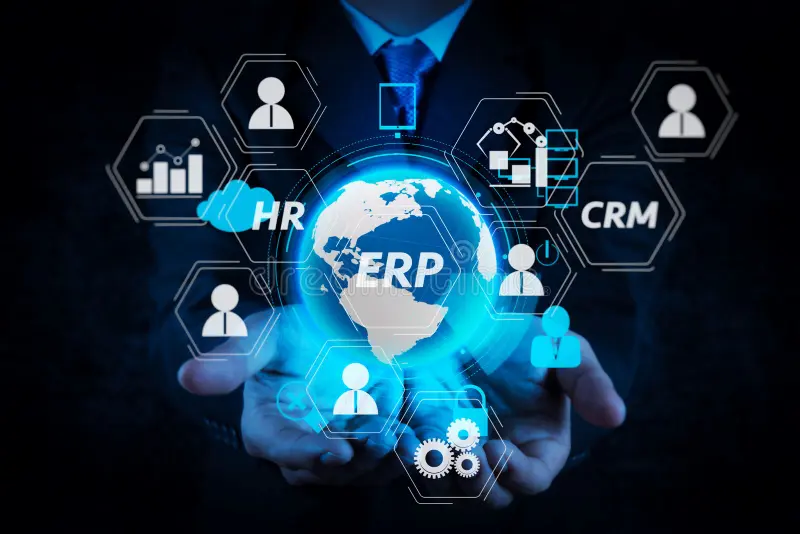
As technology continues to evolve, Enterprise Resource Planning (ERP) systems are becoming smarter, faster, and more intelligent. Businesses are increasingly investing in modern ERP solutions to improve productivity, reduce operational costs, and gain a competitive advantage. Understanding What Is an Enterprise and What Is Its Resource Planning also means staying informed about the latest ERP trends shaping the future of business management.
Artificial Intelligence (AI) Integration:
Artificial Intelligence is transforming ERP systems by automating repetitive tasks, predicting business trends, improving forecasting accuracy, and providing intelligent recommendations based on real-time business data.
Cloud-First ERP Solutions:
Cloud ERP continues to dominate because it offers flexibility, automatic updates, lower infrastructure costs, and secure remote access for businesses operating across multiple locations.
Predictive Analytics:
Modern ERP platforms use predictive analytics to forecast customer demand, inventory requirements, sales performance, and financial outcomes, helping businesses make proactive decisions.
Internet of Things (IoT):
Manufacturing and logistics companies are increasingly integrating IoT devices with ERP systems to monitor equipment, production lines, inventory, and supply chains in real time.
Mobile ERP Applications:
Business owners and managers can now monitor operations, approve workflows, review reports, and manage employees directly from smartphones and tablets.
Enhanced Cybersecurity:
As cyber threats increase, ERP providers are investing in stronger encryption, multi-factor authentication, AI-powered threat detection, and advanced access controls to protect sensitive business data.
Tips for Choosing the Right ERP System:
Selecting the right ERP system is one of the most important business decisions an organization can make. The ideal solution should support both your current operations and future growth.
Understand Your Business Requirements:
Identify your business challenges, operational goals, and the departments that will use the ERP system before comparing software options.
Consider Scalability:
Choose an ERP platform that can grow alongside your business by supporting additional users, locations, products, and business functions.
Evaluate Ease of Use:
A user-friendly interface encourages faster employee adoption and reduces training time.
Compare Features:
Ensure the ERP software includes the modules your business requires, such as:
- Accounting
- Inventory Management
- Human Resources
- Customer Relationship Management (CRM)
- Sales Management
- Procurement
- Manufacturing
- Reporting and Analytics
Check Integration Capabilities:
The ERP system should integrate seamlessly with your existing software, including payment gateways, e-commerce platforms, accounting tools, and marketing applications.
Prioritize Security:
Choose software that provides:
- Data encryption
- Regular backups
- Role-based user permissions
- Multi-factor authentication
- Compliance with industry security standards
Review Customer Support:
Reliable technical support, documentation, software updates, and employee training are essential for long-term ERP success.
Calculate Total Cost of Ownership:
Don’t focus only on the purchase price. Consider implementation, customization, maintenance, upgrades, employee training, and ongoing support costs.
Closing Thoughts:
Understanding What Is an Enterprise and What Is Its Resource Planning is essential for businesses that want to improve efficiency, streamline operations, and remain competitive in today’s digital economy. Enterprise Resource Planning systems bring together every major business function into one integrated platform, enabling organizations to make data-driven decisions, automate workflows, and enhance collaboration across departments.
Whether you’re launching a startup, expanding a growing business, or managing a large enterprise, implementing the right ERP solution can improve productivity, reduce costs, strengthen customer service, and support long-term growth. As technologies such as Artificial Intelligence, cloud computing, predictive analytics, and automation continue to evolve, ERP systems will play an even greater role in shaping the future of business management.
Call-to-Action (CTA):
Are you planning to implement an Enterprise Resource Planning (ERP) system for your business?
Share your thoughts or questions in the comments below. If you found this guide helpful, explore our other articles on business management, digital transformation, entrepreneurship, and technology to help you build a smarter and more successful business in 2026.
Important Article For Your Knowledge:
Frequently Asked Questions:
1. What is an Enterprise Resource Planning (ERP) system?
An ERP system is integrated business management software that connects finance, inventory, sales, human resources, procurement, customer management, and other departments into one centralized platform.
2. Why is ERP important for businesses?
ERP improves productivity, automates business processes, reduces operational costs, enhances collaboration, improves reporting accuracy, and supports better business decision-making.
3. Can small businesses use ERP software?
Yes. Many modern cloud-based ERP solutions are designed specifically for startups and small businesses, offering affordable pricing and scalable features.
4. Which industries benefit the most from ERP?
Manufacturing, healthcare, retail, e-commerce, education, logistics, hospitality, construction, finance, and service-based businesses all benefit from ERP implementation.
5. How long does ERP implementation take?
Implementation time depends on business size and complexity. Small businesses may complete deployment within a few weeks, while large enterprises may require several months.
6. What is the difference between ERP and CRM?
ERP manages internal business operations such as accounting, inventory, procurement, and human resources, while CRM focuses on customer relationships, sales, marketing, and customer support.
7. Is cloud ERP better than on-premise ERP?
Cloud ERP offers lower upfront costs, easier maintenance, automatic updates, and remote accessibility. On-premise ERP provides greater control and customization, making it suitable for organizations with strict security or compliance requirements.

Naeem Iqbal is the founder and lead writer at SmartWebCreator.org, a resource dedicated to helping aspiring entrepreneurs launch profitable small businesses on a budget of $1,000 or less. With a focus on practical, research-backed guidance, Naeem Iqbal researches real-world startup costs, regulatory requirements, and growth strategies across dozens of low-investment business models — from food service to home-based ventures.
Every guide on SmartWebCreator.org is written to help beginners avoid costly mistakes, understand legal requirements, and build a realistic path from idea to income — without needing a large upfront investment.
📧 Contact: webcreator2474@gmail.com
🌐 Website: smartwebcreator.org



Pingback: Why Is Content Marketing Important
Pingback: Content Marketing for Small Businesses
Pingback: Customer Journey for Small Businesses
Pingback: Small Business Strategic Planning
Pingback: Team-Building Activities in Small Business
Pingback: Business Continuity Strategies For Success
Pingback: Mistakes Small Business Owners
Pingback: What Is a Business Roadmap
Pingback: Small Business Insurance Requirements
Pingback: Is NEXT Business Insurance Legit
Pingback: Business Insurance In The USA
Pingback: Types of Small Business Insurance
Pingback: Small Business Marketing Agency
Pingback: Cheapest Small Business Insurance
Pingback: BBQ Business Under $1000
Pingback: Life Coaching Business Online
Pingback: Online Tutoring Services
Pingback: Online Coaching Business
Pingback: Side Hustles From Home For Services in 2026
Pingback: Profitable Business Ideas for UK Women In 2026
Pingback: How to Get a Startup Business Loan with No Money
Pingback: How to Start a Business with No Money in 2026
Pingback: Affiliate Marketing Invisible Strategies in 2026