
Best Sales Strategy for Small Businesses: Complete Guide
Finding the best sales strategy for small businesses is one of the most important steps toward consistent revenue and long-term growth. A great product or service doesn’t automatically generate sales. Small business owners need a clear process for finding the right customers, communicating value, following up with prospects, closing deals, and keeping existing customers satisfied.
Unlike large companies with dedicated sales departments, many small businesses have limited budgets, small teams, and owners who manage several responsibilities at the same time. That makes a simple and repeatable small business sales strategy especially valuable. Instead of trying every marketing or sales tactic available, the goal should be to identify the activities that attract qualified prospects and turn them into profitable customers.
A strong sales system connects lead generation, sales prospecting, customer communication, follow-up, conversion, and retention. Current small-business sales guidance also emphasizes choosing channels based on customer preferences and tracking KPIs such as conversion rate, average deal size, acquisition cost, sales-cycle length, win rate, retention, and referrals.
Why the Best Sales Strategy for Small Businesses Matters?
The best sales strategy for small businesses gives owners a roadmap instead of leaving sales to chance. Without a defined strategy, businesses often depend heavily on occasional referrals, random social media posts, inconsistent outreach, or discounts. These approaches may generate sales temporarily but can make revenue unpredictable.
A structured sales strategy helps answer important questions: Who is your ideal customer? What problem are you solving? Where can you find prospects? What should you say to them? How should you follow up? What makes your offer better than competing alternatives? Which sales activities are actually producing revenue?
Another important advantage is efficiency. Small businesses cannot always afford to spend hours contacting people who are unlikely to buy. A focused approach helps businesses prioritize qualified prospects and spend resources where they are more likely to generate results.
Best Sales Strategy for Small Businesses Starts With a Clear Ideal Customer:
The foundation of the best sales strategy for small businesses is knowing exactly who you want to sell to. Trying to sell to everyone often creates generic messaging that fails to connect with anyone strongly.
Create an ideal customer profile based on factors such as age, location, industry, income level, buying behavior, business size, needs, challenges, and budget. For a B2B company, this might include the company’s industry, employee count, decision-maker, and purchasing process. For a local consumer business, location, lifestyle, preferences, and purchasing frequency may be more relevant.
Once you understand your audience, your messaging becomes more specific. Instead of saying, “We provide quality marketing services,” a small agency might say, “We help local service businesses generate qualified leads through practical digital marketing.” The second message communicates a clearer audience, problem, and outcome.
This customer-focused approach should also guide your sales prospecting activities. Rather than collecting huge lists of random contacts, build a smaller list of people who genuinely fit your ideal customer profile.
Build a Strong Sales Funnel as Part of the Best Sales Strategy for Small Businesses
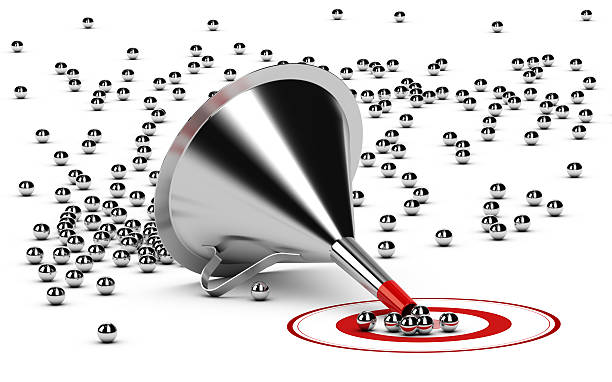
A sales funnel helps visualize the journey from potential customer to paying customer. It allows you to understand where prospects enter your business, where they become interested, where they hesitate, and where they finally make a purchase.
A typical funnel can include:
- Awareness: The prospect discovers your business.
- Interest: The prospect explores your content, products, website, or services.
- Consideration: The prospect compares your offer with other options.
- Decision: The prospect requests information, schedules a call, or prepares to purchase.
- Conversion: The prospect becomes a customer.
- Retention: The customer continues buying or recommends your business.
Modern sales-funnel guidance describes the funnel as a way to understand the customer experience from awareness through purchase and identify where customers engage or drop off.
The best sales strategy for small businesses does not treat every prospect the same. Someone discovering your business for the first time needs different communication from someone who has already requested a quote.
Use Lead Generation and Sales Prospecting Together:
Lead generation and sales prospecting are closely related but serve different purposes. Lead generation attracts people who may be interested in your products or services, while sales prospecting involves actively identifying and contacting potential buyers.
Small businesses can generate leads through SEO, helpful blog content, social media, email marketing, referrals, partnerships, networking events, online communities, webinars, and paid advertising. The strongest approach depends on where your ideal customers spend their time.
For outbound sales prospecting, research each prospect before contacting them. A personalized message that addresses a real business problem is usually more useful than a generic sales pitch.
For example, instead of writing:
“Hello, we offer web design services. Contact us if interested.”
Try:
“Hi Sarah, I noticed your company recently expanded its services. A clearer service-page structure could make it easier for visitors to understand your new offerings. We help small businesses improve their websites for better customer engagement.”
The second approach starts with relevance rather than a hard sell.
Effective small-business lead generation systems also benefit from consistent follow-up and a clear pipeline so opportunities do not disappear after the first contact.

Create a Value-Based Offer With the Best Sales Strategy for Small Businesses:
A customer rarely buys a product simply because it exists. They buy a solution to a problem, a desired result, convenience, quality, reduced risk, better performance, or another meaningful benefit.
Therefore, the best sales strategy for small businesses should communicate value clearly. Explain what customers receive, what problem it solves, why it matters, and why your business is a credible choice.
A strong offer can include:
- A clear product or service
- Specific customer benefits
- Transparent pricing or pricing ranges
- A simple explanation of the process
- Proof such as testimonials, reviews, examples, or case studies
- A clear next step
Avoid filling your sales pages with complicated industry jargon. Customers should quickly understand what you offer and why it is useful.
For service businesses, consider creating different packages. A basic, standard, and premium option can make comparisons easier while giving customers flexibility according to their needs and budgets.
Use a Simple Sales Pipeline to Organize Opportunities:
A sales pipeline gives you a visual representation of active opportunities. It can include stages such as New Lead, Contacted, Qualified, Proposal Sent, Negotiation, Won, and Lost.
The purpose is not to create unnecessary administration. The purpose is to know what needs attention.
For example, suppose you have 40 prospects but cannot remember who received a proposal, who needs a follow-up, and who is ready to buy. Your business may have enough opportunities, but poor organization is preventing sales.
A CRM can help organize contact information, interactions, deal stages, notes, reminders, and follow-up activities. Even a simple CRM system can be useful when a business starts handling more prospects.
Small-business sales guidance increasingly emphasizes practical pipeline organization, lead qualification, follow-up, and tracking rather than enterprise-level processes that require large sales teams.
Improve Follow-Up With the Best Sales Strategy for Small Businesses:
Many potential customers do not buy during the first interaction. They may need more information, time to compare options, approval from another person, or clarification about price and features.
That is why follow-up should be a central part of the best sales strategy for small businesses.
Create a follow-up schedule that might include an initial response, a helpful follow-up message, a phone call, additional information, and a final check-in. The exact timing depends on your industry and sales cycle.
Do not make every follow-up a demand for a purchase. Add value instead. Share a useful resource, answer a question, explain a feature, provide a comparison, or address an objection.
Good follow-up should feel like customer service rather than pressure.
You can also automate simple reminders through your CRM or email system. Automated workflows can help businesses respond to specific customer behaviors, while personal communication should still be used when a prospect requires individual attention.
Use Social Media as a Sales Channel:
Social media can support sales by increasing visibility, building trust, answering customer questions, and creating opportunities for direct conversations.
However, social media should not become a constant stream of promotional posts. A better social media marketing strategy mixes educational content, customer stories, product demonstrations, behind-the-scenes content, industry tips, FAQs, and occasional promotional offers.
Platforms should be selected based on your audience. A B2B company may benefit from LinkedIn, while a visual business could find opportunities through Instagram, Pinterest, YouTube, or TikTok.
Every social channel should have a clear purpose. One platform might generate awareness, another might drive website traffic, and another might support customer service.
Track which content produces meaningful actions rather than focusing only on follower counts. A post that generates five qualified leads can be more valuable than one that receives hundreds of passive views.
Build Trust Through Reviews, Testimonials, and Referrals:
Trust is one of the strongest assets a small business can develop. Potential customers often want evidence that other people have had positive experiences with your company.
Ask satisfied customers for honest reviews and testimonials. Add appropriate customer stories to your website, sales presentations, social profiles, or product pages.
A referral strategy can also become an important part of your sales process. After delivering a successful result, ask customers whether they know another person or business that could benefit from your service.
Customer relationships can produce sales beyond the original purchase. The Rhode Island Small Business Development Center notes that existing customers already know the business and can represent a strong opportunity for future purchases and referrals.
Focus on Customer Retention and Repeat Sales:
Acquiring a customer is only one part of the sales process. Customer retention can create repeat purchases, stronger relationships, referrals, and higher long-term value.
Develop a simple retention process. Follow up after purchase, ask for feedback, provide useful information, notify customers about relevant products or services, and resolve problems quickly.
For example, a web development company could contact previous clients before their annual website maintenance period. A landscaping business could remind customers about seasonal services. An online store could recommend related products based on previous purchases.
This is also where upselling and cross-selling can be useful. Upselling encourages a customer to choose a more advanced version, while cross-selling suggests a complementary product or service. Both should be relevant rather than forced.
Retention should focus on delivering value rather than repeatedly asking customers for money.
Use Personalization to Improve Sales Conversion:
Personalization can make your sales communication more relevant. Instead of sending exactly the same message to every customer, use information about their needs, industry, purchasing behavior, previous interactions, or interests.
Your sales conversion rate can improve when prospects clearly understand how the offer addresses their particular problem.
For example, an accounting company could create different messages for freelancers, retailers, and small technology companies because their financial concerns can be different.
Personalization does not necessarily require expensive software. Even basic segmentation in an email list, CRM, or spreadsheet can help you create more relevant messages.
Create a Strong Sales Script Without Sounding Robotic
A sales script can help small business owners maintain consistency, especially during calls or meetings. But a script should be a framework rather than something you read mechanically.
A simple structure could be:
- Open: Introduce yourself and establish context.
- Discover: Ask questions about the customer’s situation.
- Identify: Understand the main problem or goal.
- Present: Explain the solution in terms of benefits.
- Handle objections: Address concerns about price, timing, features, or alternatives.
- Close: Agree on a specific next step.
Open-ended questions are particularly useful. Instead of asking, “Do you need marketing services?” ask, “What is currently preventing you from getting the number of customers you want?”
This allows the conversation to focus on the customer’s situation.
Use Sales Forecasting to Plan Business Growth:
Sales forecasting helps estimate future revenue based on opportunities, historical performance, seasonality, and current pipeline activity.
You do not need a sophisticated forecasting model when starting. A simple monthly forecast can include:
- Number of qualified opportunities
- Expected deal value
- Probability of closing
- Estimated revenue
- Expected closing date
For example, if you have 10 qualified prospects worth $1,000 each and estimate that 40% will close, your weighted pipeline would be approximately $4,000.
Forecasting can help you identify gaps before they become serious. If next month’s pipeline is weak, you can increase lead generation, contact previous customers, improve offers, or increase prospecting activity.
Tracking KPIs such as average deal size, conversion rate, customer acquisition cost, sales-cycle length, win rate, retention, and referrals can also help small businesses detect problems and opportunities.
Best Sales Strategy for Small Businesses: Track the Right KPIs:
You cannot improve what you do not measure. The best sales strategy for small businesses should include a small set of useful metrics.
Important sales KPIs include:
- Lead-to-customer conversion rate: How many leads become customers?
- Average deal size: What is the typical value of a sale?
- Customer acquisition cost: How much does it cost to acquire a customer?
- Win rate: What percentage of qualified opportunities become customers?
- Sales cycle length: How long does it take to close a sale?
- Customer lifetime value: How much revenue does a customer generate over the relationship?
- Repeat purchase rate: How frequently do existing customers buy again?
Do not track dozens of metrics simply because your software provides them. Choose indicators that connect directly to revenue and business goals.
Common Sales Mistakes Small Businesses Should Avoid
Even a strong sales strategy can fail because of common mistakes.
One major mistake is targeting everyone. A narrow and well-defined customer profile usually creates more relevant messaging. Another mistake is talking too much about features instead of outcomes. Customers generally want to understand how the offer can solve their problem.
Inconsistent follow-up is another major issue. A good prospect can be lost simply because nobody remembered to contact them again. Small businesses should also avoid relying entirely on discounts. Constant discounting can reduce margins and teach customers to wait for lower prices.
Finally, avoid spending all your time looking for new customers while ignoring existing ones. Customer retention, repeat sales, and referrals can become important components of sustainable growth.
30-Day Action Plan for the Best Sales Strategy for Small Businesses:
You can begin implementing the best sales strategy for small businesses without rebuilding your entire company.
Week 1: Define your ideal customer, review your current offer, identify your best sales channels, and establish basic sales goals.
Week 2: Create or improve your sales funnel, organize your prospects, set up a simple CRM or pipeline, and prepare a follow-up process.
Week 3: Launch consistent lead generation through content, referrals, networking, outreach, social media, or another suitable channel.
Week 4: Review your conversion rate, pipeline, customer feedback, sales activity, and revenue. Identify what worked and improve the weakest stage.
The goal is not to implement everything simultaneously. Start with the areas most likely to influence revenue, then build from there.
Call to Action: Put the Best Sales Strategy for Small Businesses Into Action
Your business does not need a giant sales department to increase revenue. It needs a clear customer profile, a compelling offer, a repeatable sales funnel, consistent prospecting, disciplined follow-up, strong customer relationships, and reliable measurement.
Start today by choosing one specific sales goal. Identify your ideal customers, create a simple offer, contact qualified prospects, follow up consistently, and track the results. Once you understand which activities generate the best opportunities, invest more time and resources into those channels.
Ready to improve your sales? Start building your own small-business sales system today, track your results every week, and turn the activities that work into a repeatable growth process.
Closing Thoughts:
The best sales strategy for small businesses is not one magic technique or a single advertising platform. It is a connected system that helps your business attract the right prospects, communicate value, build trust, close sales, and maintain relationships after the purchase.
Small businesses have an advantage that large companies sometimes struggle to maintain: personal relationships. Owners can listen directly to customers, respond quickly, personalize communication, and adapt their offers based on real feedback. When these advantages are combined with a structured sales pipeline and consistent measurement, sales can become more predictable.
Most importantly, do not wait for a perfect strategy before taking action. Start with a clear target customer, a useful offer, a simple sales process, and a commitment to consistent follow-up. Then measure your results and improve one stage at a time. That ongoing process is what turns an ordinary sales effort into a sustainable business growth strategy.
FAQs About the Best Sales Strategy for Small Businesses:
What is the best sales strategy for small businesses?
The best sales strategy for small businesses combines a clear ideal customer profile, strong value proposition, targeted lead generation, sales prospecting, consistent follow-up, customer retention, and KPI tracking. The exact combination should match the industry’s customers and buying behavior.
How can a small business increase sales quickly?
A small business can begin by improving its existing sales funnel, following up with previous leads, contacting past customers, improving its offer, requesting referrals, and focusing on the sales channels that already produce qualified prospects.
Why is a sales funnel important for small businesses?
A sales funnel helps businesses understand the customer journey from awareness to purchase. It can reveal where potential customers lose interest, allowing the business to improve specific stages of the buying process.
Should small businesses use a CRM?
A CRM can be useful for organizing leads, customer information, follow-ups, deal stages, and sales activity. Small businesses can start with a simple CRM rather than adopting a complicated enterprise system.
How does customer retention improve sales?
Customer retention can create repeat purchases, stronger customer relationships, referrals, and additional opportunities such as upselling or cross-selling. Existing customers already have experience with the business, which can make future sales opportunities easier to develop.
What sales KPIs should small businesses track?
Useful KPIs include conversion rate, average deal size, customer acquisition cost, win rate, sales cycle length, customer lifetime value, retention, repeat purchases, and referrals. Tracking these metrics makes it easier to identify weak points and improve the sales process.

Naeem Iqbal is the founder and lead writer at SmartWebCreator.org, a resource dedicated to helping aspiring entrepreneurs launch profitable small businesses on a budget of $1,000 or less. With a focus on practical, research-backed guidance, Naeem Iqbal researches real-world startup costs, regulatory requirements, and growth strategies across dozens of low-investment business models — from food service to home-based ventures.
Every guide on SmartWebCreator.org is written to help beginners avoid costly mistakes, understand legal requirements, and build a realistic path from idea to income — without needing a large upfront investment.
📧 Contact: webcreator2474@gmail.com
🌐 Website: smartwebcreator.org



Pingback: How to Increase Sales Conversion Rates
Pingback: Small Business Goals Through X