10 E-Commerce Business Ideas for Beginners
Selling online no longer needs a warehouse, a big budget, or a tech background. A phone, a laptop, and a clear idea are enough to open a shop this week. The harder part is choosing an idea that fits your budget, skills, and time. 10 E-Commerce Business Ideas for Beginners.
This guide gives you 10 beginner-friendly ideas, a realistic cost range for each, and the mistakes that cost new sellers the most. None of these is a guaranteed income. Results depend on your niche, effort, and market.
Quick Answer: Best Ecommerce Business Ideas at a Glance
| Idea | Startup cost | Inventory needed? | Difficulty |
|---|---|---|---|
| Print-on-demand | $0 to $100 | No | Easy |
| Dropshipping | $50 to $300 | No | Medium |
| Digital products | $0 to $100 | No | Easy |
| Handmade goods | $50 to $400 | Yes (small) | Medium |
| Thrift reselling | $20 to $200 | Yes (small) | Easy |
| Private label | $300 to $1,500+ | Yes | Hard |
| Personalized gifts | $100 to $500 | Sometimes | Medium |
| Subscription box | $200 to $1,000+ | Yes | Hard |
| Pet products | $100 to $500 | Depends | Medium |
| Eco-friendly products | $100 to $600 | Depends | Medium |
These are planning ranges only. Your real costs depend on your products, suppliers, and platform.
How to Choose an Online Business Idea to Start With Little Money? e-commerce business ideas for beginners
Before you pick from the list, check three things:
- Skills: Can you design, write, craft, source products, or market them?
- Budget: How much can you afford to lose while you learn? Use our guide on how to estimate business startup costs to plan this properly.
- Demand: Are real people already buying this? Check search trends, marketplace listings, and social media with these free market research tools for startups.
A good beginner idea has low upfront cost, clear demand, and a niche you can describe in one sentence.
1. Print-on-Demand Store: Sell Custom T-Shirts, Mugs, and Posters Online
Print-on-demand (POD) lets you upload designs that a partner prints and ships only after a customer orders. You never hold stock.
Startup cost: $0 to $100.
Best for: Creative people, and anyone who understands a niche audience.
How to start:
- Pick a niche, such as teachers, gamers, gym fans, or pet owners.
- Create designs with a free or low-cost design tool.
- Connect a POD partner to a marketplace or your own store.
- Order samples to check print quality.
Watch out for: Thin margins, slow shipping from some suppliers, and copyright. Never use logos, characters, or quotes you don’t have rights to.
2. Drop-shipping Business: Sell Products Online Without Holding Inventory
In drop-shipping, you list products in your store, and a supplier ships them directly to the customer. You pay the supplier only after you make a sale.
Startup cost: $50 to $300 (store plan, domain, and ads or content).
Best for: People comfortable with marketing and customer service.
How to start:
- Choose a specific niche instead of a general store.
- Find reliable suppliers and order samples.
- Write your own product descriptions and set clear shipping times.
- Create a simple returns policy.
Watch out for: Long delivery times, supplier stock problems, and low margins once ads are included. Customers blame you, not the supplier, when something goes wrong.
3. Digital Products: Sell Templates, Planners, and Print-ables Online
Digital products are made once and sold many times. Examples include budget planners, resume templates, lesson plans, social media templates, and study guides.
Startup cost: $0 to $100.
Best for: Teachers, designers, writers, and professionals with useful know-how.
How to start:
- Solve one small problem, such as “a weekly meal planner for busy parents.”
- Create the file in a free design or document tool.
- Sell on a marketplace or your own store with automatic delivery.
- Collect reviews and improve the product.
Watch out for: Crowded categories and copied designs. Make your product more specific and more useful than the average listing.
4. Handmade Products on Etsy: Start a Small Online Shop From Home
If you make candles, jewelry, crochet items, soap, wall art, or leather goods, an online marketplace gives you built-in shoppers.
Startup cost: $50 to $400, mostly materials and photography.
Best for: Crafters who enjoy making products and telling a story.
How to start:
- Make a small batch and price it to cover materials, time, fees, and shipping.
- Take clear photos in natural light.
- Write search-friendly titles using words buyers type.
- Package carefully to protect your reviews.
Watch out for: Underpricing your time, and product safety rules. Items like cosmetics, candles, and children’s products may have labeling or safety requirements, so check local rules.
5. Thrift and Resale Business: Flip Secondhand Items on eBay and Poshmark
Resellers buy items from thrift stores, garage sales, or their own closets and sell them online at a higher price.
Startup cost: $20 to $200.
Best for: People who enjoy hunting for bargains and learning what sells.
How to start:
- Start with your own unused items to learn listing and shipping.
- Choose a category you know, such as sneakers, books, vintage clothing, or tools.
- Check recently sold listings to find real prices, not just asking prices.
- Photograph every flaw and describe it honestly.
Watch out for: Slow-moving stock, fake or replica items, and storage space. Buy only what you’ve researched.
6. Private Label Products: Sell Your Own Brand on Amazon
With private label, you source a generic product from a manufacturer and sell it under your own brand name, usually with improved packaging or small changes.
Startup cost: $300 to $1,500 or more.
Best for: Beginners with some savings who can research carefully.
How to start:
- Look for products with steady demand and weak competitors’ reviews.
- Request samples from several suppliers.
- Improve one clear weakness, such as quality, size, or packaging.
- Order a small first batch.
Watch out for: Upfront inventory risk, marketplace fees, and product liability. If you sell physical goods that could cause harm, read our guide to small business liability insurance.
7. Personalized Gifts Business: An Easy Ecommerce Startup With Repeat Demand: e-commerce business ideas for beginners
People pay more for items made just for them: names on mugs, custom pet portraits, engraved cutting boards, or birthday boxes.
Startup cost: $100 to $500.
Best for: People with craft, design, or simple production skills.
How to start:
- Pick one product and one occasion, such as weddings or birthdays.
- Create a simple order form that collects names, dates, and spelling.
- Set clear production and shipping times.
- Offer a proof before production when possible.
Watch out for: Spelling errors, rush orders, and no-refund disputes on custom items. State your policy clearly before payment.
8. Niche Subscription Box: Build Recurring Revenue Online: e-commerce business ideas for beginners
A subscription box delivers a curated set of products on a regular schedule, such as monthly tea, stationery, or snacks for a specific interest.
Startup cost: $200 to $1,000 or more.
Best for: Sellers who like curation, packaging, and community building.
How to start:
- Choose a tight niche, such as “beginner gardeners” or “student study kits.”
- Test with a one-time box before offering subscriptions.
- Calculate cost per box, including packaging and shipping.
- Plan how to keep customers from cancelling.
Watch out for: Shipping costs and cancellations. Many subscription boxes fail because the unit costs weren’t calculated carefully.
9. Pet Products Store: A Profitable Niche Online Store Idea: e-commerce business ideas for beginners
Pet owners buy often and care about quality. You can sell treats, toys, accessories, grooming items, or custom products like name tags and portraits.
Startup cost: $100 to $500.
Best for: Pet lovers who understand a specific audience.
How to start:
- Narrow down to one type, such as “products for senior dogs” or “cat enrichment toys.”
- Choose a supplier or make products yourself.
- Share helpful content, such as care tips and product comparisons.
- Pay attention to safety standards, especially for food and chew items.
Watch out for: Product safety, ingredient claims, and competition from large retailers. Specializing is your best defense.
10. Eco-Friendly Products Store: Sell Sustainable Goods Online: e-commerce business ideas for beginners
Reusable bags, bamboo items, refill products, and zero-waste kits appeal to shoppers who want greener choices.
Startup cost: $100 to $600.
Best for: Sellers who care about the topic and can explain product benefits honestly.
How to start:
- Choose a clear angle, such as zero-waste kitchen or plastic-free bath products.
- Verify supplier materials and certifications.
- Tell customers exactly what makes the product sustainable.
- Use simple, recyclable packaging.
Watch out for: “Greenwashing.” Don’t make environmental claims you can’t prove, since misleading claims can hurt trust and may break advertising rules.
Ecommerce Business Startup Costs: A Sample $300 Budget
| Item | Estimated cost |
|---|---|
| Domain name | $15 |
| Store platform (first months) or marketplace fees | $40 |
| Product samples | $80 |
| Packaging and labels | $40 |
| Photography props or editing tools | $25 |
| Business registration (if required) | $50 |
| Marketing and contingency | $50 |
| Total | about $300 |
If your budget is smaller, start with digital products or print-on-demand. If it’s larger, add inventory and insurance.
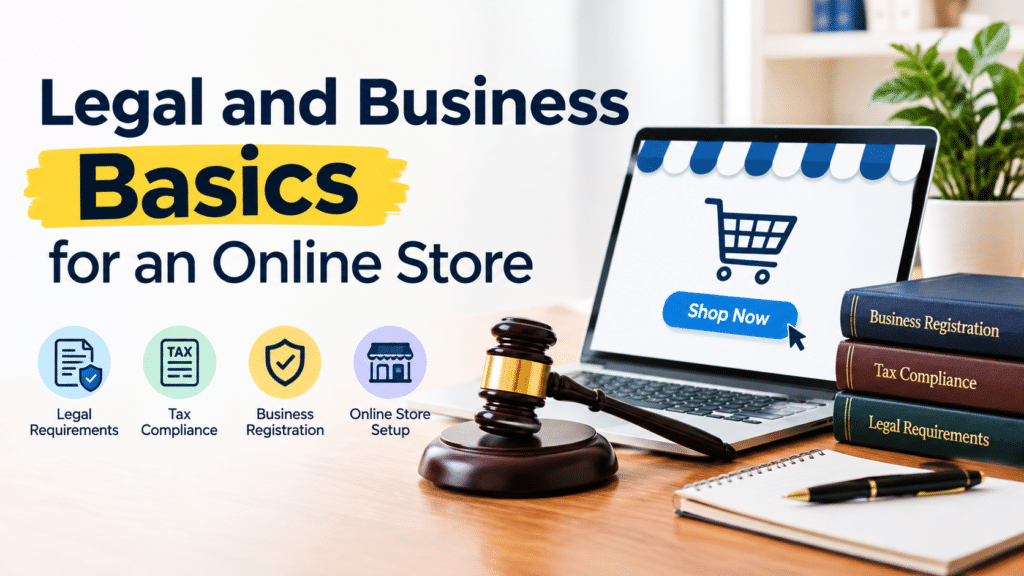
Legal and Business Basics for an Online Store
Rules vary by country, state, and city, so check locally. Most beginners should plan on:
- A business license or registration, if required.
- A business name or DBA.
- A separate bank account for business income.
- Sales tax or VAT rules for your location and your customers’ locations.
- Clear policies for shipping, returns, privacy, and refunds.
- Honest product descriptions and legal rights to all images, designs, and brand names.
Many sellers start as sole proprietors. Read our guide on whether you need an LLC for a small business before spending money on one.
How to Get Your First Customers Online?
- Use marketplaces first. Etsy, eBay, Amazon, and similar platforms already have shoppers searching.
- Build one social channel. Pick Instagram, TikTok, Pinterest, or Facebook, depending on where your buyers are.
- Write helpful content. Guides and product comparisons can bring search traffic over time.
- Collect email addresses. An email list gives you customers you control.
- Ask for reviews. Social proof matters a lot for new shops.
- Offer a small launch discount. Do this carefully so you protect your margins.
- Use outside help when needed. A freelancer or assistant can handle customer messages or listings. See our guide on virtual assistant jobs with no experience for the type of help available.
Common Ecommerce Mistakes to Avoid: e-commerce business ideas for beginners
- Choosing a product before checking demand
- Selling “everything” instead of picking a niche
- Ignoring shipping costs and platform fees when setting prices
- Buying too much inventory too early
- Using images or designs you don’t have the right to use
- Skipping clear return and shipping policies
- Making exaggerated claims about products
- Depending on one marketplace or one supplier
- Not tracking income, expenses, and taxes
- Quitting before testing at least a few products and channels
Final Thoughts: e-commerce business ideas for beginners
Choosing among the best e-commerce business ideas for beginners comes down to a few decisions: pick one niche, test demand before spending, protect yourself with clear policies, and start with the lowest-risk model you can handle. You don’t need a big budget, but you do need patience and honest customer service.
Start small, learn from your first orders, and let happy customers become your best marketing.
Take Action Today: e-commerce business ideas for beginners
Take three steps this week. Choose one idea from this list, check demand on a marketplace by reading recent sold listings, and calculate your cost per sale including fees and shipping. Then create a simple listing for one product. Save this guide so you can return to it as you build.
Why you can trust this guide:
I’ve been writing about business, personal finance, and self-improvement for three years, and I run Smart Web Creator, a site focused on practical ways to start a small business on a budget. I build these guides from public platform information, small business resources, and cost data, and I flag where costs and rules differ by location. This guide is for general education and is not legal, tax, or financial advice.
Sources and Further Reading
- Shopify Blog, Ecommerce Business Ideas: How to Start an Ecommerce Business Without Spending Any Money
- Etsy, Fees & Payments Policy
- eBay Seller Center, Understanding Selling Fees
- Federal Trade Commission, Green Guides: Guides for the Use of Environmental Marketing Claims
- IRS, Self-Employed Individuals Tax Center
- Your city or county business license office and state department of revenue
Ye links article ke kin hisson se match karte hain:
| Link | Article ka section |
|---|---|
| Shopify blog | Ideas list aur “How to Choose an Online Business Idea” |
| Etsy fees | Idea 4 (Handmade Products on Etsy) aur startup costs |
| eBay seller fees | Idea 5 (Thrift and Resale) aur fee comparison |
| FTC Green Guides | Idea 10 (Eco-Friendly Products), greenwashing warning |
| IRS tax center | Legal and Business Basics, taxes |
Transparency Note:
This article is for general information only. I have no financial relationship with any platform, supplier, or tool mentioned.
How this guide was prepared:
This guide is based on general e-commerce practice, public platform documentation, and small business cost resources. Fees, rules, and platform policies change often, so confirm current details before you start. This article is for general education and is not legal, tax, or financial advice.
Frequently Asked Questions:
What is the best e-commerce business for beginners?
Print-on-demand and digital products are among the lowest-risk options because you don’t need to buy stock. The best choice depends on your skills and budget.
How much money do I need to start an online business?
Many beginner models can start for $0 to $500. Private label and subscription boxes usually need more.
Can I start an e-commerce business with no money?
Possibly, by selling digital products, using print-on-demand, or reselling items you already own. You will still spend time and may face small platform fees.
Is dropshipping still worth it?
It can work, but margins are often thin and competition is high. Specific niches, reliable suppliers, and good customer service matter more than a generic store.
Do I need a website to sell online?
No. Marketplaces let you start without your own site. A store of your own gives you more control, and you can add one later.
Do I need a license to sell products online?
Requirements vary by location and product type. Check with your city, county, state, and tax authority.
How long does it take to make the first sale?
It varies widely. Strong photos, clear titles, and a defined niche help, but no timeline is guaranteed.

Author is the founder and lead writer at SmartWebCreator.org, a resource dedicated to helping aspiring entrepreneurs launch profitable small businesses on a budget of $1,000 or less. With a focus on practical, research-backed guidance, Naeem Iqbal researches real-world startup costs, regulatory requirements, and growth strategies across dozens of low-investment business models — from food service to home-based ventures.
Every guide on SmartWebCreator.org is written to help beginners avoid costly mistakes, understand legal requirements, and build a realistic path from idea to income — without needing a large upfront investment.
📧 Contact: webcreator2474@gmail.com
🌐 Website: smartwebcreator.org