
Magical Small Business Accounting Software In 2026
Magical Small Business Accounting Software in 2026 refers to modern accounting tools that make routine financial management easier through automation, cloud access, digital records, reporting, invoicing, expense tracking, and bank connections.
The word “magical” in this article describes the convenience these tools can provide—it does not mean accounting software can run a business without human oversight. Business owners still need to review transactions, check financial reports, correct errors, and make financial decisions.
Traditional bookkeeping often involves spreadsheets, paper receipts, manual calculations, and repetitive data entry. Modern small business accounting software can reduce some of that workload by bringing financial information into one place.
Depending on the software and plan, features can include:
- Income and expense tracking
- Online invoicing
- Bank transaction imports
- Bank reconciliation
- Receipt management
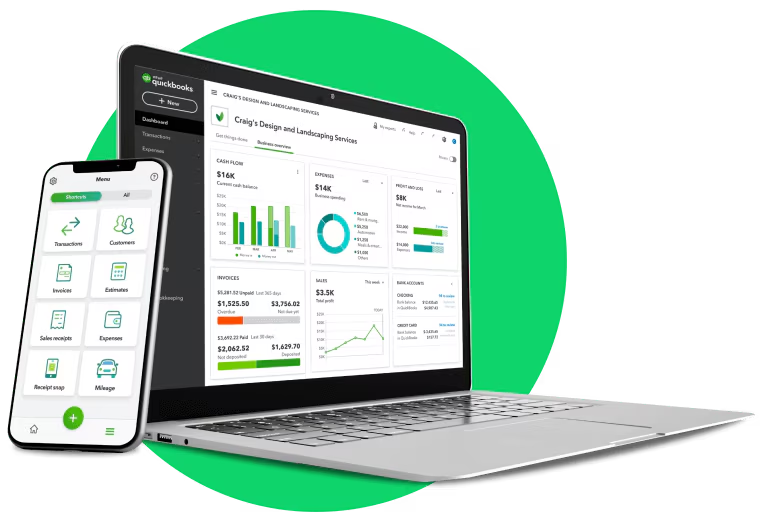
- Financial reports
- Cash flow monitoring
- Tax-related reports
- Customer and vendor records
- Inventory management
- Expense management
- Multi-user access
Why Magical Small Business Accounting Software in 2026 Matters:
For many owners, Magical Small Business Accounting Software in 2026 can turn accounting from a collection of scattered tasks into a more organized workflow.
A small business may have dozens or hundreds of financial transactions every month. Recording each transaction manually can take considerable time and increases the opportunity for mistakes.
Modern accounting software for small business can help centralize information and automate selected repetitive tasks. For example, Wave says its software can automatically import and categorize bank transactions on its Pro plan, while Zoho Books provides bank feeds, transaction rules, expense tracking, and reconciliation features.
The practical benefit is not simply saving time. Better organization can make it easier to understand:
- How much revenue the business generates
- Where money is being spent
- Which invoices remain unpaid
- How much cash is available
- Whether expenses are increasing
- Whether the business is profitable
- What financial obligations are approaching
This information can support better business decisions.
Magical Small Business Accounting Software in 2026: Features to Look For
When evaluating Magical Small Business Accounting Software in 2026, focus on features that solve actual problems in your business instead of choosing software simply because it has a long feature list.
Automated Bookkeeping:
Automated bookkeeping can reduce repetitive data entry. Depending on the platform, transactions may be imported from connected financial accounts and categorized according to rules or previous activity.
Automation should still be reviewed because incorrectly categorized transactions can affect financial reports.
Invoicing:
Invoicing software for small business allows owners to create and send invoices, monitor payment status, and sometimes send payment reminders.
This can be especially useful for freelancers, consultants, agencies, and service businesses that regularly bill customers.
Expense Tracking:
A good business expense tracking software solution should make it easy to record expenses, categorize them, and retain supporting documentation.
Some platforms also support digital receipt capture. Zoho Books, for example, offers receipt uploads and automated data extraction features.
Financial Reporting:
Look for reports such as:
- Profit and loss
- Balance sheet
- Cash flow
- Expense reports
- Accounts receivable
- Accounts payable
- Sales reports
Financial reports turn raw transactions into information that can help you understand the business.
Magical Small Business Accounting Software in 2026: Cloud Accounting
One of the biggest changes in small business accounting is the widespread use of cloud accounting software.
Cloud-based systems allow financial information to be accessed through internet-connected devices rather than relying entirely on a single computer.
This can be useful when business owners work remotely or collaborate with accountants and bookkeepers.
For example, Xero describes its platform as an online accounting system with features including invoicing, bank connections, expense management, reporting, and bill management.
Cloud accounting can also make collaboration easier because authorized users may be able to access the same financial records without repeatedly exchanging files.
However, business owners should still pay attention to user permissions, account security, backups, and the provider’s data policies.
Magical Small Business Accounting Software in 2026: QuickBooks Online
QuicBook is one of the widely recognized accounting platforms used by small businesses. Current 2026 comparisons from NerdWallet include QuickBooks Online alongside XEROR, FreshBooks, ZOHO Books, and Wave when discussing small-business accounting software.
QuickBooks can be considered when a business needs a broader accounting ecosystem and integrations. However, the appropriate plan and features depend on the business.
When evaluating QuickBooks or any other platform, consider:
- Monthly or annual cost
- Number of users
- Invoicing requirements
- Expense tracking
- Bank connections
- Reporting needs
- Payroll requirements
- Inventory requirements
- Accountant access
- Third-party integrations
Do not choose software simply because it is popular. A smaller business with straightforward bookkeeping may need fewer features than a growing company with employees, inventory, and multiple financial workflows.
Magical Small Business Accounting Software in 2026: XERO
XERO provides online accounting tools for businesses, including invoicing, bank connections, expense management, reporting, and bill-related workflows. Its current feature information also includes cash-flow forecasting, KPI analysis, multiple currencies, and project-related tracking on applicable offerings.
Xero can therefore be relevant to businesses that need cloud-based accounting and want to connect accounting information with other business applications.
Xero also states that its platform connects with third-party applications such as Shopify, Stripe, and Gusto, which can be useful when a business has a wider technology stack.
Before subscribing, check the current plan structure and confirm that the features you actually need are included in your chosen plan.
Magical Small Business Accounting Software in 2026: Wave
WAVE offers accounting tools aimed at small businesses and includes a free Starter plan in its current U.S. offering. Its current product information lists invoicing, bookkeeping records, cash-flow management, and customer management, while its Pro plan adds features such as automatic bank transaction imports, categorization, receipt capture, and additional user access.
Wave can be relevant for entrepreneurs looking for a straightforward accounting workflow, particularly when their accounting requirements are relatively simple.
However, availability of features and services can vary by country. This is particularly important for businesses outside the United States, so check regional availability before choosing a platform.
Magical Small Business Accounting Software in 2026: ZOHO BOOKS
ZOHO BOOKS provides cloud accounting features including invoicing, expense tracking, bank reconciliation, inventory management, project-related functionality, and financial reporting.
One useful aspect is its connection with the wider Zoho ecosystem. This may be relevant to businesses already using other Zoho products.
Zoho Books also supports role-based access, which can help businesses provide different levels of access to owners, employees, accountants, or other authorized users.
Businesses should still check country-specific tax, currency, payment, and compliance features before adopting the software.
Magical Small Business Accounting Software in 2026: FRESHBOOKS
FRESHBOOKS is another accounting platform frequently included in current small-business accounting comparisons. NerdWallet’s 2026 comparison lists FreshBooks alongside QuickBooks Online, XERO, ZOHO Books, and Wave and notes features such as invoicing and time tracking.
FreshBooks may be worth examining if your business is service-oriented and relies heavily on invoicing, projects, time tracking, and client-related financial workflows.
As with any accounting software, compare the actual features and pricing of the current plans with your business requirements before subscribing.
How Magical Small Business Accounting Software in 2026 Helps With Bookkeeping:
One major advantage of Magical Small Business Accounting Software in 2026 is the ability to organize bookkeeping tasks in one digital system.
A basic bookkeeping workflow may include:
Step 1: Connect appropriate business financial accounts.
Step 2: Import or record transactions.
Step 3: Categorize income and expenses.
Step 4: Attach receipts or supporting documentation.
Step 5: Reconcile transactions with financial statements.
Step 6: Review accounts receivable and payable.
Step 7: Generate financial reports.
Step 8: Investigate unusual transactions or financial changes.
This workflow can reduce the amount of manual work involved in small business bookkeeping software.
However, automation does not mean you should stop checking your books. Review automated categorization and reconciliation regularly to ensure the financial information remains accurate.
How Magical Small Business Accounting Software in 2026: Supports Cash Flow Management
Cash flow is one of the most important financial areas for a small business.
A company can have strong sales and still face a cash shortage if customers pay slowly while expenses must be paid immediately.
Modern accounting systems can help owners monitor:
- Customer invoices
- Outstanding balances
- Upcoming bills
- Business expenses
- Bank balances
- Cash inflows
- Cash outflows
Some platforms provide forecasting tools. For example, Xero currently advertises a 180-day cash-flow forecast among its listed features.
The exact forecasting capabilities depend on the software and plan.
The goal of cash flow management software is not to predict the future perfectly. Instead, it can help you identify potential cash gaps early enough to investigate your options.
How Magical Small Business Accounting Software in 2026: Helps With Financial Reports
Financial reporting is another important reason to use accounting software.
A business owner may regularly review:
Profit and Loss Statement
Shows revenue, expenses, and profit over a selected period.
Balance Sheet
Shows assets, liabilities, and equity at a particular point in time.
Cash Flow Report
Shows movements of cash into and out of the business.
Accounts Receivable Report
Shows unpaid customer invoices.
Accounts Payable Report
Shows bills and other amounts owed by the business.
These reports can support financial reporting software workflows and help owners understand business performance.
Instead of relying only on bank balances, owners can examine the wider financial picture.
How to Choose Magical Small Business Accounting Software in 2026:
Choosing Magical Small Business Accounting Software in 2026 should start with your actual requirements.
Ask yourself:
What Type of Business Do You Operate?
A freelancer may need invoicing and expense tracking, while an ecommerce business may need inventory and sales integrations.
How Many Transactions Do You Have?
A business processing hundreds of transactions monthly may benefit more from automation than a company with only a few transactions.
Do You Need Payroll?
If you have employees, determine whether payroll is integrated or requires a separate service.
Do You Need Inventory Management?
Product-based businesses may require inventory tracking, purchase orders, and stock-related reporting.
Does Your Accountant Need Access?
Check whether your software allows appropriate accountant or bookkeeper access.
What Is Your Budget?
Compare total costs rather than just the advertised starting price. Additional users, payroll, payments, integrations, and advanced features may affect the final cost.
Common Mistakes When Using Magical Small Business Accounting Software in 2026:
Accounting software can make financial management easier, but mistakes are still possible.
Assuming Automation Is Always Accurate
Automated categorization should be reviewed.
Ignoring Bank Reconciliation
Imported transactions do not eliminate the need to reconcile accounts.
Choosing Too Many Features
More features can sometimes make a system harder to manage.
Failing to Back Up Important Records
Maintain appropriate records according to your business and legal requirements.
Mixing Personal and Business Transactions
Separate business finances whenever appropriate.
Not Reviewing Financial Reports
Software is useful only if you actually use the information it produces.
Choosing Software Without Checking Regional Support
Tax rules, currencies, payment systems, payroll, and available features can differ by country.
Magical Small Business Accounting Software in 2026: Security and Data Protection
Financial information is sensitive, so security should be part of your software selection process.
Look for features such as:
- Secure login
- Multi-factor authentication where available
- Role-based user permissions
- Bank connection security
- Data encryption
- Activity logs
- Secure backups
- Reliable account recovery procedures
For example, Wave states that its bank connections are read-only and describes PCI Level-1 certification for handling payment-card and bank-account information.
Security features vary between providers and plans, so review the current documentation for whichever platform you choose.
Closing Thoughts:
Magical Small Business Accounting Software in 2026 can make everyday financial management more organized, but the real value comes from using the software consistently and understanding the information it provides.
Modern accounting platforms can bring bookkeeping, invoicing, expense tracking, bank reconciliation, financial reporting, and cash-flow monitoring into one workflow. Tools such as QUICKBOOKS, XERO, WAVE, ZOHO BOOKS and FRESHBOOKS offer different combinations of these capabilities. Current features and pricing can change, so always verify the provider’s latest plan information before subscribing.
The best accounting system for your company is the one that fits your actual workflow. A freelancer may need simple invoicing and expense tracking, while an ecommerce company may need inventory management and integrations. A growing company may need payroll, advanced reporting, multiple users, and more sophisticated cash-flow tools.
The important thing is not to chase every new feature. Choose a system that helps you maintain accurate records, understand your finances, and spend less time on repetitive administrative work.
Take Control of Your Business Finances Today:
If you are still managing your business finances through scattered spreadsheets, paper receipts, and manual calculations, this is a good time to review your accounting workflow.
Make a list of the features you actually need, compare available software, check the current pricing and regional availability, and choose a system that can support your business as it grows.
Start with better financial organization today, and use accounting technology as a tool to save time, improve visibility, manage cash flow, and make more informed business decisions.
FAQ About Magical Small Business Accounting Software in 2026:
What is Magical Small Business Accounting Software in 2026?
It is a descriptive term for modern small-business accounting software that uses automation, cloud technology, digital records, reporting, invoicing, and financial management features to simplify routine accounting tasks.
What is the best small business accounting software in 2026?
There is no single software that fits every business. QuickBooks Online, Xero, Wave, Zoho Books, and FreshBooks are among the platforms included in current 2026 small-business accounting comparisons. The right choice depends on your business type, features, budget, location, and accounting requirements.
Is free accounting software enough for a small business?
It can be enough for some freelancers and microbusinesses with simple financial requirements. Businesses with employees, inventory, multiple locations, or advanced reporting needs may require additional functionality.
Can accounting software replace an accountant?
Accounting software can automate and organize many routine tasks, but it does not replace professional judgment in complex accounting, tax, compliance, or financial situations.
What features should small businesses look for in accounting software?
Important features can include bookkeeping, invoicing, expense tracking, bank reconciliation, financial reporting, cash flow monitoring, receipt management, tax-related reports, integrations, and appropriate user access.
Is cloud accounting software safe?
Cloud accounting providers use different security measures and policies. Before choosing one, review its authentication, permissions, encryption, data protection, bank-connection, backup, and account-recovery practices.

Naeem Iqbal is the founder and lead writer at SmartWebCreator.org, a resource dedicated to helping aspiring entrepreneurs launch profitable small businesses on a budget of $1,000 or less. With a focus on practical, research-backed guidance, Naeem Iqbal researches real-world startup costs, regulatory requirements, and growth strategies across dozens of low-investment business models — from food service to home-based ventures.
Every guide on SmartWebCreator.org is written to help beginners avoid costly mistakes, understand legal requirements, and build a realistic path from idea to income — without needing a large upfront investment.
📧 Contact: webcreator2474@gmail.com
🌐 Website: smartwebcreator.org



Pingback: Business Financial Reporting Software
Pingback: Small Business Accounting Management
Pingback: Small Business Financial Management