
Customer Journey for Small Businesses: Complete Guide
Customer Journey for Small Businesses: Understanding how customers discover, evaluate, purchase from, and interact with a business is essential for sustainable growth. Customers rarely go from first seeing a business directly to making a purchase. Instead, they move through several stages: awareness and research, consideration, purchase, retention, and advocacy.
This entire process is known as the Customer Journey for Small Businesses. By understanding this journey, small business owners can identify what customers need at every stage and create better experiences that encourage people to choose their business and return in the future.
For a small business, understanding the customer journey can be particularly valuable because resources are often limited. Instead of spending money on every possible marketing channel, you can focus your efforts on the places and experiences that influence your target customers most.
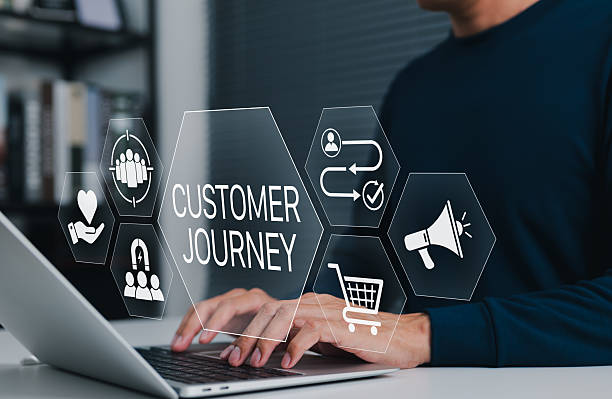
What Is the Customer Journey for Small Businesses?
The Customer Journey for Small Businesses is the complete experience a person has with a business, beginning when they first become aware of the company and continuing through research, purchase, post-purchase interaction, repeat business, and potential referrals.
The journey can look different depending on the type of business.
For example, someone looking for a local cleaning service might:
- Search Google for cleaning companies.
- Visit several websites.
- Read customer reviews.
- Compare prices and services.
- Contact two or three companies.
- Choose one provider.
- Receive the service.
- Evaluate the experience.
- Leave a review.
- Use the company again later.
An online customer may follow a completely different path. They might discover a business through Pinterest, read a blog post, subscribe to an email newsletter, follow the company’s social media account, and eventually purchase a digital product.
This is why understanding the customer journey map is important. It helps you see your business from the customer’s perspective rather than looking only at your internal sales process.
Why Customer Journey for Small Businesses Matters for Growth?
The Customer Journey for Small Businesses matters because every interaction can influence whether someone becomes a customer, leaves your website, completes a purchase, or recommends your company.
A business may have a good product but still lose customers because the buying experience is confusing or inconvenient.
For example, a potential customer may discover your website through Google but leave because:
- The website loads slowly.
- Prices are difficult to find.
- Product information is unclear.
- There are no customer reviews.
- The contact process is complicated.
- The website does not work well on mobile devices.
Improving these areas can make the path to purchase easier.
A strong customer journey can help with:
- Customer acquisition
- Conversion rate optimization
- Customer satisfaction
- Customer retention
- Repeat purchases
- Brand loyalty
- Online reviews
- Referrals
- Revenue growth
For small businesses, improving the existing customer experience can sometimes be more practical than continuously spending more money to attract new visitors.
Customer Journey for Small Businesses: The Main Stages:
Although customer journeys vary by industry, most follow several common stages.
The major stages include:
- Awareness
- Consideration
- Decision
- Purchase
- Retention
- Advocacy
These stages should not always be treated as a perfectly straight line. A customer might move backward, compare multiple businesses, ask questions, or leave and return later.
Understanding each stage allows you to create content, offers, communication, and support that match the customer’s needs at that particular moment.
Customer Journey for Small Businesses at the Awareness Stage:
The awareness stage begins when potential customers first discover your business or realize they have a problem that needs solving.
At this point, the person may not know your company at all.
They might discover you through:
- Google Search
- Social media
- YouTube
- Online communities
- Referrals
- Local search
- Blog posts
- Online advertisements
- Word of mouth
Your goal at this stage is not necessarily to make an immediate sale. Instead, you want to become visible and demonstrate that your business understands the customer’s problem.
For example, if you operate a lawn-care company, a potential customer might search for:
“How often should I mow my lawn?”
An informative blog article can introduce that person to your company before they are ready to purchase lawn-care services.
This is where content marketing for small businesses can be valuable. Helpful articles, videos, guides, social posts, and educational resources can attract people who are researching problems related to your products or services.
Customer Journey for Small Businesses at the Consideration Stage:
At the consideration stage, customers know they have a problem and are actively researching potential solutions.
They may compare:
- Businesses
- Products
- Prices
- Features
- Reviews
- Guarantees
- Customer service
- Locations
- Delivery options
This is where your website and online presence become particularly important.
Make it easy for potential customers to understand:
- What do you offer?
- Who is it for?
- How does it work?
- How much does it cost?
- Why should they choose you?
This is also the stage where customer touchpoints become important. A touchpoint is any interaction a customer has with your company.
Examples include:
- Website pages
- Product descriptions
- Social media posts
- Reviews
- Emails
- Phone calls
- Chat messages
- Advertisements
Every touchpoint should provide useful and consistent information.

Customer Journey for Small Businesses at the Decision Stage:
At the decision stage, the customer is getting closer to making a purchase.
They may have narrowed their options to two or three businesses.
Small details can influence the final decision.
For example:
- Clear pricing
- Strong reviews
- Easy checkout
- Fast responses
- Professional branding
- Helpful FAQs
- Flexible payment options
- Clear guarantees
- Convenient booking
Your conversion rate optimization strategy should focus on reducing unnecessary friction at this stage.
If a customer wants to buy but cannot figure out how to place an order, you may lose the sale.
Use clear calls to action such as:
- Buy Now
- Get a Quote
- Book a Consultation
- Schedule an Appointment
- Start Your Free Trial
- Contact Us
The customer should always know what to do next.
Customer Journey for Small Businesses During the Purchase Stage:
The purchase stage is where interest becomes action.
However, the customer’s experience does not end when they click the payment button.
The purchase process should be:
- Simple
- Secure
- Fast
- Transparent
- Mobile-friendly
Avoid asking customers for unnecessary information.
Clearly communicate:
- Price
- Taxes
- Shipping costs
- Delivery time
- Payment options
- Return policy
- Cancellation policy
For service businesses, make booking simple and provide confirmation after the appointment is scheduled.
A smooth small business sales funnel should guide customers naturally from interest to purchase without creating unnecessary obstacles.
Customer Journey for Small Businesses After the Purchase:
The post-purchase stage is one of the most overlooked parts of the customer journey.
After purchasing, customers want confirmation that they made the right decision.
Send useful information such as:
- Order confirmation
- Shipping updates
- Appointment confirmation
- Product instructions
- Setup guides
- Customer support information
- Follow-up emails
For service businesses, follow up after the service and ask whether everything was satisfactory.
This stage is critical for customer retention strategies because a positive post-purchase experience can encourage customers to return.
For example, an online store could send product-use tips after a purchase. A consultant could send additional resources after a session. A local service provider could send maintenance recommendations.
These small actions can make customers feel supported rather than forgotten.
Customer Journey for Small Businesses and Customer Retention:
Acquiring a new customer is only part of business growth. Keeping existing customers can also be extremely valuable.
Your retention strategy could include:
- Loyalty programs
- Email newsletters
- Exclusive offers
- Personalized recommendations
- Follow-up messages
- Helpful educational content
- Excellent customer support
- Birthday or anniversary offers
- Early access to new products
Do not send promotional messages constantly.
Instead, provide useful information between promotional offers.
For example, a gardening business could send seasonal lawn-care tips and then recommend relevant services when customers are likely to need them.
This approach makes communication more helpful and less intrusive.
Customer Journey for Small Businesses and Customer Advocacy:
The final stage is advocacy.
A satisfied customer may:
- Leave a positive review
- Recommend your business
- Share your content
- Refer friends
- Post about your product
- Become a repeat customer
Customer advocacy is particularly valuable for small businesses because recommendations can create trust before a potential customer ever contacts you.
Encourage satisfied customers to leave honest reviews, but avoid manipulating or fabricating reviews.
You can simply ask:
“If you enjoyed your experience, we’d appreciate an honest review.”
You can also create referral programs where appropriate.
A strong customer loyalty strategy focuses on creating experiences worth recommending rather than simply asking people to promote your business.
How to Create a Customer Journey Map for Small Businesses
A customer journey map is a visual or written representation of the customer’s experience with your company.
Creating one does not require expensive software.
Start by identifying your ideal customer.
Then document:
| Stage | Customer Goal | Customer Action | Touchpoint | Possible Problem |
|---|---|---|---|---|
| Awareness | Find a solution | Google search | Blog | Cannot find useful information |
| Consideration | Compare options | Visit websites | Website | Pricing unclear |
| Decision | Choose provider | Read reviews | Reviews | Not enough trust |
| Purchase | Buy easily | Checkout | Store | Checkout complicated |
| Retention | Get support | Contact business | Email/support | Slow response |
| Advocacy | Share experience | Leave review | Review platform | No review request |
This simple exercise can reveal gaps in your customer experience.
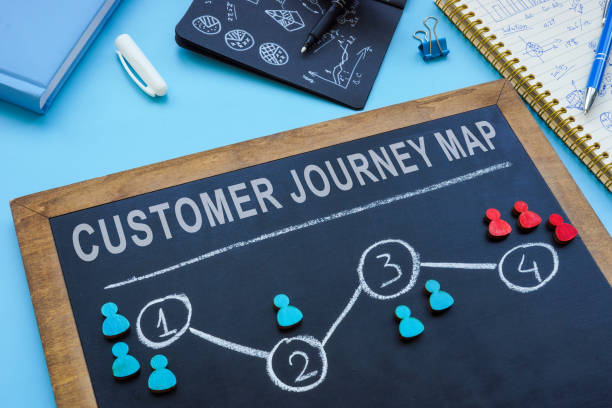
Customer Journey for Small Businesses: Identify Customer Pain Points:
Customer pain points are problems, frustrations, or obstacles that make the buying experience difficult.
Common pain points include:
- Complicated checkout
- Slow customer support
- Confusing website navigation
- Unexpected fees
- Limited payment options
- Poor communication
- Difficult returns
- Lack of product information
- Slow delivery
- Unclear pricing
One effective way to discover pain points is to ask customers directly.
Questions could include:
- What almost stopped you from buying?
- What part of the process was confusing?
- What information did you wish we provided?
- How could we improve your experience?
- What made you choose us over another company?
Customer feedback can provide information that analytics alone cannot reveal.
Customer Journey for Small Businesses: Improve Your Website:
Your website is often one of the most important customer touchpoints.
Make sure visitors can quickly understand:
- What your business does
- Who you serve
- What you offer
- Why customers should trust you
- How to contact or buy from you
Use clear navigation and readable content.
Important pages may include:
- Home
- About
- Services or Products
- Contact
- FAQ
- Testimonials
- Pricing
- Blog
Your website should also be mobile-friendly because many customers browse and purchase from mobile devices.
Use SEO and Content Marketing:
Search engine optimization can help businesses become visible when potential customers are actively searching for solutions.
Create content around questions your customers actually ask.
For example, a small accounting business could publish articles about:
- How to prepare for tax season
- Common bookkeeping mistakes
- Small business budgeting
- Business expense tracking
- Cash flow management
This type of local SEO for small businesses can be particularly useful for companies serving specific geographic areas.
Content should not be created only to insert keywords. It should solve genuine customer problems and provide useful information.
Use Email Marketing:
Email can support several stages of the customer journey.
For potential customers, email can provide educational resources.
For existing customers, it can provide:
- Product updates
- Helpful tips
- Special offers
- New services
- Customer appreciation messages
Create different email sequences for different customer needs rather than sending the same message to everyone.
For example, someone who downloaded a beginner’s guide but has not purchased may need educational content, while an existing customer may benefit from product recommendations or loyalty offers.
Personalize the Experience:
Customers increasingly expect businesses to understand their needs.
Personalization does not always require sophisticated technology.
Simple examples include:
- Using a customer’s name
- Recommending related products
- Remembering previous purchases
- Sending relevant information
- Offering location-specific services
- Providing targeted follow-ups
The goal is to make communication more relevant without becoming intrusive.
Small businesses can often use customer relationship management tools to organize customer information and maintain consistent communication.
Measure Performance:
You cannot improve what you do not measure.
Useful metrics include:
- Website conversion rate
- Lead conversion rate
- Customer acquisition cost
- Average order value
- Customer retention rate
- Repeat purchase rate
- Cart abandonment rate
- Email engagement
- Customer satisfaction
- Review ratings
Common Customer Journey Mistakes Small Businesses Should Avoid:
Even businesses with good products can create poor customer experiences.
Ignoring the Customer’s Perspective:
Do not assume that customers understand your business as well as you do.
Review your website and buying process from a beginner’s perspective.
Making the Journey Too Complicated:
Customers should not need to click through ten pages to find basic information.
Focusing Only on Getting New Customers:
Existing customers deserve attention too.
A Simple Customer Journey Strategy for Small Businesses:
You can begin improving your customer journey with a simple five-step process.
Step 1: Define your ideal customer.
Identify who they are, what they need, and what problems they are trying to solve.
Step 2: List every customer touchpoint.
Write down every place where customers interact with your business.
Step 3: Identify friction.
Find areas where customers become confused, frustrated, or uncertain.
Step 4: Improve the biggest problems first.
Do not try to redesign everything simultaneously.
Step 5: Measure the results.
Track conversion rates, customer feedback, retention, and other relevant metrics.
Repeat this process regularly.
Call to Action:
You do not need expensive software or a large marketing team to improve your customer journey.
Start today by choosing one customer type and writing down every step they take from discovering your business to becoming a repeat customer.
Then identify one frustrating or confusing step and improve it.
Make your website easier to navigate, clarify your pricing, improve your follow-up communication, respond faster to customer questions, or create helpful content that answers customer concerns.
Start improving your Customer Journey for Small Businesses today and turn more first-time visitors into satisfied, loyal customers.
Small improvements at different stages can create a much better overall experience.
Closing Thoughts:
The Customer Journey for Small Businesses is more than a marketing concept. It is a complete view of how people experience your company before, during, and after a purchase.
From the first Google search to the final review, every interaction can influence customer trust and purchasing decisions. The most successful small businesses do not simply focus on selling products. They focus on understanding customer needs and making every important interaction easier, clearer, and more valuable.
Start by mapping your customer journey. Identify your major touchpoints. Find pain points. Improve your website and content. Make purchasing simple. Provide excellent support after the sale. Encourage satisfied customers to return and recommend your business.
You do not have to improve everything at once.
Choose the stage where customers experience the biggest problem and start there. Measure the results, learn from customer feedback, and continue improving. Over time, a carefully managed customer journey can strengthen customer relationships, improve retention, increase conversions, and create a stronger foundation for sustainable small business growth.
Important Article for Your Knowledge:
Frequently Asked Questions:
What is the Customer Journey for Small Businesses?
The Customer Journey for Small Businesses is the complete experience a customer has with a company, from discovering the business and researching its products or services to purchasing, receiving support, returning, and potentially recommending the business.
What are the main stages of a customer journey?
The main stages are awareness, consideration, decision, purchase, retention, and advocacy. Customers may move between stages rather than following a perfectly linear path.
Why is customer journey mapping important for small businesses?
Customer journey mapping helps businesses understand customer needs, identify frustrating touchpoints, discover conversion problems, and improve the overall customer experience.
How can a small business improve its customer journey?
A business can improve its customer journey by simplifying navigation, providing clear information, improving customer support, making checkout easier, collecting feedback, creating useful content, and following up after purchases.
What are customer touchpoints?
Customer touchpoints are the interactions customers have with a business. Examples include websites, social media, emails, advertisements, phone calls, reviews, customer service, physical stores, and product packaging.
How does customer experience affect small business growth?
A positive customer experience can increase customer satisfaction, repeat purchases, referrals, reviews, and loyalty. A poor experience can cause customers to abandon purchases or choose competitors.
What is the difference between a customer journey and a sales funnel?
A sales funnel generally focuses on moving prospects toward a purchase, while a customer journey covers the broader experience before, during, and after the purchase, including retention and advocacy.

Naeem Iqbal is the founder and lead writer at SmartWebCreator.org, a resource dedicated to helping aspiring entrepreneurs launch profitable small businesses on a budget of $1,000 or less. With a focus on practical, research-backed guidance, Naeem Iqbal researches real-world startup costs, regulatory requirements, and growth strategies across dozens of low-investment business models — from food service to home-based ventures.
Every guide on SmartWebCreator.org is written to help beginners avoid costly mistakes, understand legal requirements, and build a realistic path from idea to income — without needing a large upfront investment.
📧 Contact: webcreator2474@gmail.com
🌐 Website: smartwebcreator.org

Pingback: Small Business Strategic Planning
Pingback: Team-Building Activities in Small Business