Small Business Strategic Planning for Beginners: Complete Guide
You need clear goals, a strong understanding of your customers, realistic financial expectations, and a practical plan for growth. This is where Small Business Strategic Planning becomes essential.
Strategic planning helps business owners decide where the company is going, what it needs to achieve, which resources it should prioritize, and how progress will be measured. For beginners, the process may sound complicated, but it does not have to be. A small business does not need a 100-page corporate strategy. A simple, focused plan can provide enough direction to make better decisions.
A good strategy can help you avoid wasting money, identify profitable opportunities, understand competitors, improve marketing, manage risks, and build a stronger foundation for long-term success.
What Is Small Business Strategic Planning?
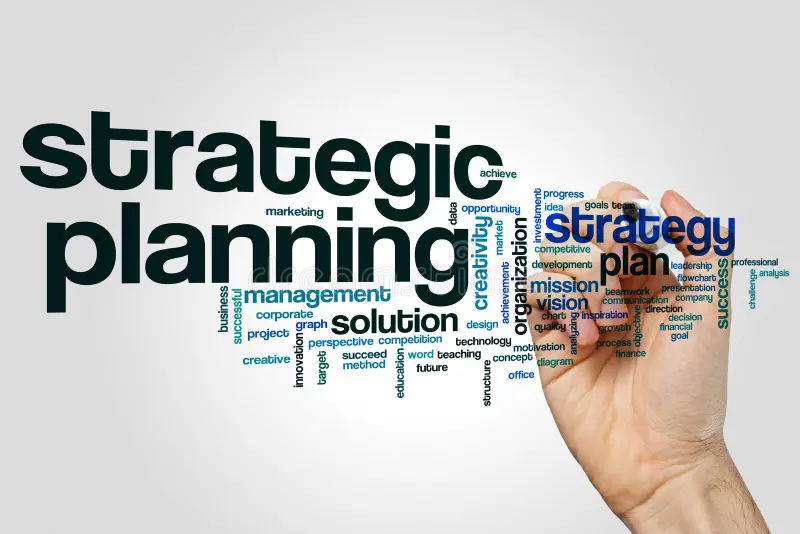
Small Business Strategic Planning is the process of deciding the long-term direction of a small company and creating a practical roadmap for achieving its objectives. It involves analyzing the current position of the business, understanding customers and competitors, establishing priorities, setting measurable goals, and deciding what actions should be taken.
A strong small business strategy connects your everyday activities with your larger business objectives. Instead of simply reacting to whatever problem appears each day, you have a framework for deciding what deserves your time, money, and attention.
For example, imagine you operate a small online clothing store. Your general goal may be to grow sales. A strategic plan turns that broad idea into specific objectives such as increasing organic traffic, improving product descriptions, building an email list, increasing repeat purchases, and reducing unnecessary operating costs.
The key components of a strategic planning process usually include:
- Business vision
- Mission statement
- Target market
- Competitor analysis
- SWOT analysis
- Strategic goals
- Marketing strategy
- Financial planning
- Risk management
- Key performance indicators
- Action plans
- Regular performance reviews
The purpose is not to predict the future perfectly. Instead, the purpose is to create a clear direction while remaining flexible enough to respond to changing market conditions.
Why Small Business Strategic Planning Is Important for Beginners?
For beginners, Small Business Strategic Planning can provide something extremely valuable: clarity.
New business owners often try to do everything simultaneously. They may want to improve their website, create social media accounts, launch advertisements, add new products, hire employees, build an email list, and enter new markets at the same time.
The problem is that limited resources make this approach difficult.
A strategic plan helps you prioritize.
For example, if your biggest problem is a lack of customers, your priority might be lead generation and marketing rather than expanding your product line. If customers are coming to your website but not purchasing, improving conversion rates may be more important than generating additional traffic.
A well-designed business growth strategy helps you focus on the activities most likely to produce meaningful results.
Strategic planning can help a small business:
- Establish clear priorities
- Improve decision-making
- Allocate resources effectively
- Understand customer needs
- Identify competitive advantages
- Improve financial management
- Prepare for business risks
- Create measurable objectives
- Track business performance
- Identify opportunities for expansion
It can also help you communicate your direction to employees. When employees understand the company’s priorities, they can make better decisions and work toward common objectives.
Small Business Strategic Planning Starts With Vision and Mission:
The first step in Small Business Strategic Planning is understanding what you want your business to become.
Your business vision describes the future you want to create. It should provide a broad picture of where you want the company to go.
For example:
“To become a trusted provider of affordable digital solutions for small businesses across the United States.”
Your vision does not need to be complicated. It simply needs to communicate your long-term direction.
Your mission statement is more focused on what your business does today, who it serves, and the value it provides.
For example:
“We help small businesses build affordable and effective online marketing systems that generate sustainable growth.”
When creating your vision and mission, ask yourself:
- Who do I want to serve?
- What problem does my business solve?
- What makes my business different?
- What value do I provide?
- Where do I want the company to be in three to five years?
A clear vision can guide your small business planning because it gives you a reference point when making important decisions.
If an opportunity does not support your vision or mission, you can question whether it deserves your resources.
Small Business Strategic Planning Through SWOT Analysis:
One of the easiest strategic planning tools for beginners is a SWOT analysis. SWOT stands for Strengths, Weaknesses, Opportunities, and Threats.
It provides a simple business strategy framework for understanding your current position.
Strengths:
Strengths are internal advantages that your business already possesses.
Examples include:
- Strong customer service
- Experienced staff
- Unique products
- Affordable pricing
- Loyal customers
- Specialized knowledge
- Strong website
- Established brand reputation
Weaknesses:
Weaknesses are internal limitations that could hold the business back.
Examples include:
- Limited startup capital
- Lack of employees
- Weak online presence
- Poor inventory management
- Limited technical skills
- Dependence on one major customer
Opportunities:
Opportunities are external factors that could create growth.
Examples include:
- New customer segments
- Emerging technologies
- Growing demand
- New online marketplaces
- Strategic partnerships
- New product categories
Threats:
Threats are external factors that could negatively affect your company.
Examples include:
- New competitors
- Rising costs
- Economic uncertainty
- Changing customer preferences
- Supply chain problems
- Regulatory changes
Once you complete your SWOT analysis, look for connections. For example, if your strength is excellent customer service and an opportunity is growing demand in a new market, you might develop a strategy that uses your service quality as a competitive advantage.
Small Business Strategic Planning Requires SMART Goals:
After analyzing your business, the next step is establishing clear objectives.
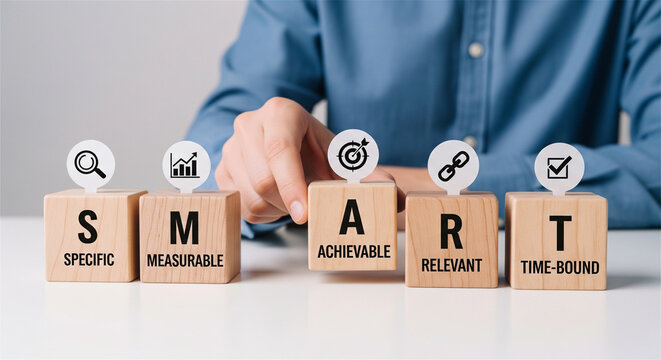
One of the most effective methods for beginners is using SMART goals.
SMART stands for:
- Specific
- Measurable
- Achievable
- Relevant
- Time-bound
A weak goal would be:
“I want more customers.”
A stronger strategic business goal would be:
“Increase qualified leads by 25% within six months by publishing SEO content, improving landing pages, and launching an email marketing campaign.”
The second goal gives you something specific to work toward and measure.
Your strategic business goals can cover several areas.
Financial Goals:
Examples include:
- Increase monthly revenue
- Improve profit margins
- Reduce unnecessary expenses
- Build emergency cash reserves
- Improve cash flow
Marketing Goals:
Examples include:
- Increase organic website traffic
- Generate more qualified leads
- Grow an email list
- Improve conversion rates
- Increase brand awareness
Customer Goals:
Examples include:
- Increase customer retention
- Improve customer satisfaction
- Increase repeat purchases
- Reduce complaints
Operational Goals:
Examples include:
- Reduce delivery times
- Automate repetitive tasks
- Improve inventory management
- Create standard operating procedures
Choose only a few high-priority goals. Too many goals can dilute your focus.
How Small Business Strategic Planning Defines Your Target Market?
A business cannot effectively target everyone. Small Business Strategic Planning should identify the people most likely to purchase your products or services.
Your target market might be defined by:
- Age
- Location
- Income
- Occupation
- Business size
- Interests
- Problems
- Buying behavior
- Budget
- Online habits
For example, instead of saying:
“We provide marketing services to businesses.”
A more specific target market might be:
“We provide affordable digital marketing services to small local businesses with fewer than 20 employees.”
The more clearly you understand your target audience, the easier it becomes to create relevant marketing messages.
You should also identify customer pain points.
A customer may struggle with:
- Low website traffic
- Poor online visibility
- Expensive advertising
- Lack of time
- Low sales
- Difficult technology
- Weak social media engagement
Your business development strategy should explain how your products or services solve these problems.
Small Business Strategic Planning Includes Competitor Analysis:
Competitor analysis is another important part of Small Business Strategic Planning.
Your objective is not to copy competitors. Instead, study them to understand the market and discover opportunities to differentiate your business.
Analyze competitors based on:
- Products
- Services
- Pricing
- Website
- Customer reviews
- Marketing
- Social media
- Customer service
- Strengths
- Weaknesses
Ask questions such as:
- What are competitors doing well?
- Where are customers dissatisfied?
- What products or services are missing?
- Can I offer better convenience or customer service?
- Can I specialize in a particular customer group?
This analysis can help you create a competitive advantage.
For example, instead of competing with every general cleaning company, you might specialize in eco-friendly cleaning services for busy professionals. Specialization can make your marketing message clearer and help you stand out.
Create a Marketing Strategy as Part of Small Business Strategic Planning:
Marketing should be directly connected to your overall strategy.
A good marketing strategy identifies how you will attract potential customers, convert them into buyers, and encourage repeat business.
Possible marketing channels include:
- Search engine optimization
- Content marketing
- Social media marketing
- Email marketing
- Local SEO
- Paid advertising
- Referral marketing
- Networking
- Partnerships
- Video marketing
Do not automatically use every channel.
Instead, identify where your target audience spends time.
For example, a local service business may benefit from local SEO, customer reviews, Google Business Profile optimization, referrals, and social media.
An online business might focus on SEO, content marketing, Pinterest, YouTube, email marketing, and social media.
Your marketing strategy should also include measurable KPIs such as website visitors, leads, conversion rate, customer acquisition cost, and sales.This makes it easier to determine which marketing activities deserve additional investment.
Financial Planning in Small Business Strategic Planning:
A strategic plan cannot be successful without realistic financial planning.
Many small businesses fail to grow because they focus heavily on revenue while ignoring expenses and cash flow.
Your financial plan should consider:
- Revenue targets
- Operating expenses
- Marketing costs
- Payroll
- Inventory
- Taxes
- Technology
- Emergency reserves
- Profit margins
- Cash flow
Separate essential expenses from optional expenses.
For example, website hosting, essential software, employee wages, and inventory may be necessary expenses, while certain subscriptions or advertising campaigns may be optional.
Review your budget regularly and compare actual performance with your expectations.
Financial planning should also be connected to your business goals. If your goal is to increase sales by 30%, determine how much investment will be required to achieve that target and whether the expected return justifies the cost.

Build an Action Plan for Small Business Strategic Planning:
A strategy becomes useful when you turn it into action.
Your action plan should identify:
- What needs to be done
- Who will do it
- When it should be completed
- What resources are needed
- How success will be measured
For example:
| Goal | Action | Deadline | KPI |
|---|---|---|---|
| Increase organic traffic | Publish SEO articles | Monthly | Organic clicks |
| Increase leads | Improve landing pages | 30 days | Lead volume |
| Improve retention | Launch email campaign | 45 days | Repeat purchases |
| Reduce costs | Review subscriptions | 30 days | Monthly expenses |
This makes your business planning process practical rather than theoretical.
Break large objectives into smaller tasks. Completing small tasks consistently can gradually produce significant improvements.
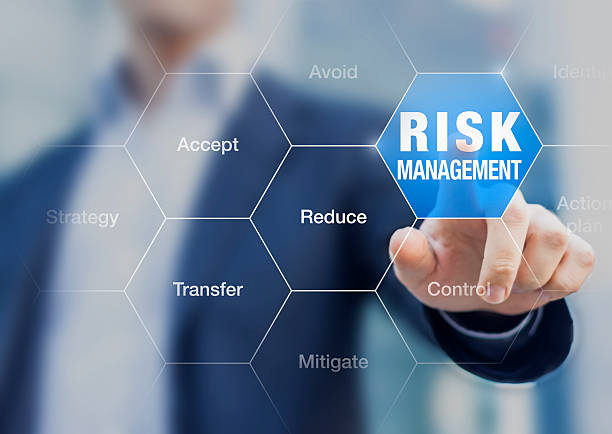
Small Business Strategic Planning Should Include Risk Management:
Every company faces risks. Strategic planning should identify these risks before they become serious problems.
Common risks include:
- Cybersecurity incidents
- Data loss
- Employee turnover
- Supplier problems
- Economic downturns
- Legal issues
- Equipment failure
- Website downtime
- Reputation damage
- Loss of a major customer
For each important risk, determine what you can do to reduce its impact.
For example:
- Risk: Website goes offline.
- Strategy: Maintain reliable hosting, backups, and recovery procedures.
- Risk: Key employee leaves.
- Strategy: Document important processes and cross-train employees.
- Risk: Major supplier becomes unavailable.
- Strategy: Maintain relationships with alternative suppliers.
Risk management should be a normal part of small business management, not something you think about only after a problem occurs.
Measure Results With KPIs:
Your strategic plan should include Key Performance Indicators (KPIs).
KPIs help you determine whether your strategy is producing results.
Useful small business KPIs include:
- Monthly revenue
- Net profit
- Website traffic
- Qualified leads
- Conversion rate
- Customer acquisition cost
- Customer lifetime value
- Repeat purchase rate
- Customer retention
- Average order value
Avoid tracking every number you can find.
Instead, focus on metrics connected to your strategic business goals.
For example, if your primary objective is increasing online sales, website traffic alone is not enough. You should also monitor conversion rates, average order value, revenue, and customer acquisition costs.
Small Business Strategic Planning Tools Beginners Can Use:
- You do not need expensive software to develop an effective strategy.
- A simple spreadsheet can be used to track goals, deadlines, budgets, and KPIs.
- Project management platforms can help organize tasks and responsibilities.
- Customer surveys can provide valuable information about customer expectations and problems.
- Website analytics can help you understand traffic and user behavior.
- Search performance tools can help identify which keywords and pages are bringing organic visitors.
- A SWOT worksheet can help you evaluate strengths, weaknesses, opportunities, and threats.
The important thing is not which tool you choose. The important thing is whether the information helps you make better decisions.
Common Small Business Strategic Planning Mistakes Beginners Should Avoid:
Even a well-designed plan can fail if the business owner makes basic strategic mistakes.
Setting Too Many Goals:
Trying to achieve 15 major goals simultaneously can overwhelm a small team. Choose three to five high-priority objectives.
Ignoring Cash Flow:
Revenue does not automatically mean profitability. Always understand your expenses and available cash.
Copying Competitors:
Your competitors’ strategy may not work for your customers. Study them, but develop your own competitive position.
Focusing Only on Short-Term Results:
Some investments, such as SEO, customer relationships, and brand building, may take time to produce results.
Failing to Measure Performance:
Without KPIs, you cannot confidently determine whether your strategy is working.
Never Updating the Plan:
Markets and customers change. Your strategy should change when new information becomes available.
A 90-Day Small Business Strategic Planning Process for Beginners:
If creating a one-year or five-year strategy feels overwhelming, start with 90 days.
Days 1–30: Analyze Your Business
During the first month:
- Review your finances
- Identify your target customer
- Analyze competitors
- Complete a SWOT analysis
- Review marketing performance
- Identify your biggest problems
- Identify your strongest opportunities
Days 31–60: Build Your Strategy
During the second month:
- Select three to five strategic business goals
- Establish KPIs
- Create a marketing strategy
- Set your budget
- Assign responsibilities
- Create an action plan
Days 61–90: Execute and Measure
During the final month:
- Implement priority tasks
- Track KPIs
- Gather customer feedback
- Review performance
- Identify problems
- Adjust your strategy
At the end of 90 days, you will have real data that can help you develop a stronger strategy for the next quarter.
Small Business Strategic Planning Checklist:
Before completing your strategic plan, review this checklist:
- Define your vision.
- Write your mission statement.
- Identify your target market.
- Research competitors.
- Complete a SWOT analysis.
- Establish your competitive advantage.
- Create SMART goals.
- Develop a marketing strategy.
- Prepare a financial plan.
- Identify business risks.
- Select relevant KPIs.
- Create an action plan.
- Assign responsibilities.
- Set deadlines.
- Review performance regularly.
- Update the strategy when necessary.
This checklist provides a simple foundation for Small Business Strategic Planning without making the process unnecessarily complicated.
Call to Action: Start Small Business Strategic Planning Today:
You do not need to spend weeks creating a complicated business strategy.
Start with one page.
Write down where your business is today, where you want it to be 12 months from now, your three biggest challenges, your three biggest opportunities, and the three goals that could make the biggest difference.
Then choose one action you can complete this week.
Start your Small Business Strategic Planning today, turn your business goals into measurable actions, and create a practical roadmap for sustainable growth.
The best strategy is not the one that looks impressive on paper. It is the strategy that you consistently implement, measure, and improve.
Closing Thoughts on Small Business Strategic Planning:
Small Business Strategic Planning gives beginners a practical framework for turning ideas into organized business decisions. It helps you understand your customers, evaluate competitors, manage resources, establish priorities, identify risks, and build a realistic path toward growth.
You do not need to predict everything that will happen in the next five years. Instead, create a flexible strategy that provides direction while allowing your business to adapt.
Start with your vision and mission. Understand your target market. Complete a SWOT analysis. Establish SMART goals. Develop your marketing and financial strategies. Identify KPIs and turn your objectives into specific actions.
Most importantly, review your strategy regularly.
A strategic plan by itself does not guarantee success. Results come from combining planning with consistent execution, customer understanding, financial discipline, and the ability to adapt.For beginners, simplicity is an advantage. Focus on the few activities that can make the biggest difference rather than trying to accomplish everything at once.
With clear priorities and consistent execution, Small Business Strategic Planning can become one of the most valuable tools for building a competitive, sustainable, and profitable business.
Important Article For Your Knowledge:
Frequently Asked Questions:
What is Small Business Strategic Planning?
Small Business Strategic Planning is the process of defining a company’s direction, establishing measurable goals, analyzing customers and competitors, allocating resources, managing risks, and creating actions to achieve business objectives.
Why is strategic planning important for a small business?
Strategic planning helps small business owners prioritize limited time, money, and resources. It can improve decision-making, identify growth opportunities, reduce unnecessary spending, and create a clearer path toward business goals.
What should a small business strategic plan include?
A basic strategic plan should include a vision, mission, target market, SWOT analysis, competitor analysis, strategic goals, marketing strategy, financial plan, KPIs, risk management, and an action plan.
How often should a small business review its strategic plan?
Businesses can monitor important KPIs monthly and conduct a more detailed strategic review quarterly. A larger annual review can help establish priorities for the following year. The strategy should also be updated when significant market or business changes occur.
What is the difference between a business plan and a strategic plan?
A business plan generally explains how a business will operate, including its business model, market, products, finances, and operations. A strategic plan focuses more heavily on direction, priorities, competitive positioning, goals, and actions for achieving those goals.
Can beginners create a strategic plan without a consultant?
Yes. Beginners can create an effective basic strategic plan using SWOT analysis, customer research, financial records, spreadsheets, KPI tracking, and an action plan. Professional advice may be useful for complicated financial, legal, or organizational situations.
What are the most useful strategic planning tools for small businesses?
Useful tools include SWOT analysis, SMART goals, competitor analysis, customer research, financial forecasting, KPI dashboards, action plans, and risk assessments. The best tools are those that help you make better business decisions.

Naeem Iqbal is the founder and lead writer at SmartWebCreator.org, a resource dedicated to helping aspiring entrepreneurs launch profitable small businesses on a budget of $1,000 or less. With a focus on practical, research-backed guidance, Naeem Iqbal researches real-world startup costs, regulatory requirements, and growth strategies across dozens of low-investment business models — from food service to home-based ventures.
Every guide on SmartWebCreator.org is written to help beginners avoid costly mistakes, understand legal requirements, and build a realistic path from idea to income — without needing a large upfront investment.
📧 Contact: webcreator2474@gmail.com
🌐 Website: smartwebcreator.org



Pingback: Team-Building Activities in Small Business
Pingback: Customer Journey for Small Businesses