How to Increase Sales Conversion Rates: Complete Guide
Knowing how to increase sales conversion rates is essential for businesses that want to generate more revenue from their existing website visitors, leads, and customers. Getting traffic is only one part of digital marketing. The bigger challenge is persuading those visitors to take meaningful action, such as purchasing a product, requesting a quote, booking a consultation, signing up for a service, or becoming a repeat customer.
A high amount of website traffic does not automatically mean high sales. A website can attract thousands of visitors but still produce disappointing revenue when the offer is unclear, the buying process is complicated, or customers do not trust the business. This is why conversion rate optimization, often called CRO, has become an important part of modern sales and marketing strategies.
The good news is that improving conversions does not always require a major investment. Small businesses can often achieve better results by understanding their customers, improving their sales funnel, creating stronger landing pages, simplifying forms, strengthening calls to action, adding social proof, and following up with potential buyers.
This guide explains practical and realistic methods for improving conversions while creating a smoother customer experience.
Why Learning How to Increase Sales Conversion Rates Matters?
Understanding how to increase sales conversion rates can help a business grow without depending entirely on attracting more visitors. Imagine that your website receives 10,000 visitors every month and converts 2% of them. That results in 200 conversions. If improvements increase the conversion rate to 3%, the same traffic could produce 300 conversions.
This demonstrates an important principle: sometimes you do not need more traffic; you need to make better use of the traffic you already have.
Improving conversion rates can support several business goals, including increased revenue, better return on marketing investment, more qualified leads, lower customer acquisition costs, and stronger customer relationships.
A successful strategy should not focus only on getting someone to click a button. It should create a better overall buying experience. When visitors understand your offer, trust your company, and can easily complete the desired action, they are more likely to become customers.
Understand Your Target Audience Before Optimizing Conversions:
One of the most important steps in how to increase sales conversion rates is understanding your target audience. You cannot create an effective sales message if you do not know what your customers need, fear, value, or expect.
Start by defining your ideal customer. Think about their age, location, profession, industry, budget, interests, common challenges, purchasing motivations, and objections.
For a small business, creating a basic customer profile can make marketing much more focused. For example, a business selling accounting services to entrepreneurs should understand that business owners may care about saving time, reducing financial mistakes, improving cash flow, and staying organized.
Customer research can come from surveys, reviews, customer support conversations, social media comments, sales calls, competitor research, and website analytics. Pay attention to the exact words customers use to describe their problems.
These insights can improve your customer journey, because each stage of the buying process can be designed around real customer expectations instead of assumptions.
How to Increase Sales Conversion Rates With a Clear Value Proposition?
A strong value proposition answers a simple question: Why should someone choose your business?
Many companies describe what they sell but fail to explain why the customer should care. A product description may list features, but a conversion-focused message explains the result those features can produce.
For example:
“We provide website design services.”
This describes the service but does not communicate much value.
A stronger version could be:
“We create fast, mobile-friendly websites that help small businesses attract more customers and generate leads.”
The second statement explains the audience, service, and potential benefit.
Your value proposition should be easy to find on your homepage, landing pages, product pages, and important sales materials. Keep the language simple and avoid unnecessary technical terminology.
Your unique selling proposition, or USP, can strengthen the value proposition further by explaining what makes your business different. That difference could be affordability, convenience, specialization, customer service, speed, quality, customization, or another meaningful advantage.
Improve Your Landing Pages for Better Conversions:
Landing pages have a direct relationship with how to increase sales conversion rates because they often receive traffic from advertising campaigns, search engines, social media, and email marketing.
A landing page should have one primary objective. If the goal is to collect leads, the page should encourage visitors to complete a lead form. If the goal is to sell a product, the page should guide the user toward purchasing.
A high-quality landing page should include a strong headline, a clear explanation of benefits, supporting visuals, relevant proof, a simple CTA, and answers to common customer questions.
Avoid overwhelming the visitor with too many competing offers. If the page contains ten different actions, customers may not know which one is most important.
Your landing page copy should also match the marketing message that brought the visitor there. When an advertisement promises a specific solution and the landing page immediately delivers that solution, the experience feels more relevant.
How to Increase Sales Conversion Rates With Powerful Calls to Action?
Calls to action have a major influence on how to increase sales conversion rates. A CTA tells visitors exactly what you want them to do next.
Generic buttons such as “Click Here” or “Submit” do not always communicate enough information. A more specific CTA can make the next step clearer.
Examples include:
“Get My Free Quote”
“Start My Free Trial”
“Book a Strategy Call”
“Download the Free Guide”
“Shop Now”
“Get Started Today”
Your CTA should fit the customer’s stage in the sales funnel. A visitor who is learning about your business may respond better to “Learn More,” while a highly interested prospect may be ready for “Book a Consultation.”
Experiment with button wording, placement, supporting text, and the surrounding message. The best CTA is not necessarily the most aggressive one; it is the one that feels appropriate and valuable to the visitor.
Build Trust Before Asking Customers to Buy:
Trust is one of the biggest factors affecting online sales. Customers want confidence that your business is legitimate, your product will perform as promised, and you will support them if something goes wrong.
This is why social proof is an important part of conversion optimization.
Useful trust elements include genuine customer reviews, testimonials, ratings, case studies, customer logos, certifications where relevant, guarantees, secure payment information, clear contact details, and transparent policies.
For service businesses, showing examples of completed projects can be especially effective. For ecommerce stores, customer reviews and product images can help reduce uncertainty.
Place trust signals close to decision points. A testimonial near a consultation form or product reviews near a purchase button can provide reassurance at the exact moment customers are considering action.
Avoid fake reviews and exaggerated claims. Authenticity matters because customers can quickly lose trust when promotional language sounds unrealistic.

How to Increase Sales Conversion Rates by Removing Buying Friction?
Another major factor in how to increase sales conversion rates is reducing friction. Friction refers to anything that makes the buying or conversion process unnecessarily difficult.
Common examples include complicated checkout forms, hidden costs, slow websites, unclear pricing, too many steps, poor mobile design, forced account creation, confusing navigation, and limited payment options.
Review your conversion process from the customer’s point of view. Ask yourself:
- Can visitors understand the offer quickly?
- Can they easily find pricing?
- Is the next step obvious?
- Are forms too long?
- Are shipping or additional costs clearly explained?
- Can customers complete the process easily on a smartphone?
- Small improvements can make the experience much smoother.
For ecommerce businesses, simplifying checkout optimization can be particularly valuable. Remove unnecessary fields, explain shipping information clearly, provide multiple payment methods where appropriate, and reduce distractions during checkout.
For lead-generation websites, shorter forms may increase submissions when all the requested information is not essential.
Optimize Your Website for Mobile Users:
Mobile optimization is now an essential component of how to increase sales conversion rates. Customers increasingly discover businesses and products through smartphones, social platforms, search engines, and mobile advertising.
A website may look excellent on a desktop computer but still create conversion problems on smaller screens.
Check that your website has readable fonts, clear buttons, fast-loading pages, simple navigation, properly formatted images, short forms, and a straightforward checkout process.
Pay special attention to CTA buttons. They should be large enough to tap comfortably without accidentally selecting another element.
You should also compare desktop and mobile performance using your analytics platform. If mobile visitors have significantly lower conversion rates, investigate whether slow loading, poor design, confusing navigation, or difficult forms are causing the problem.
How to Increase Sales Conversion Rates Through Personalization?
Personalization can make the customer experience more relevant and is another useful element of how to increase sales conversion rates.
Instead of presenting the same message to every visitor, businesses can create different experiences based on customer behavior, interests, previous purchases, location, industry, or position in the buying journey.
For example, an online clothing store can recommend products based on browsing activity. A B2B software company can show different content to startups and larger organizations. An email campaign can send different offers to first-time subscribers and existing customers.
Even simple personalization can make a difference. Segment your email list according to customer type, buying history, or interests. Create landing pages for specific campaigns rather than sending every visitor to the homepage.
Personalization should always make the experience more useful rather than intrusive.
Create Content That Helps Customers Make Decisions:
Content marketing can support conversions by answering questions before customers contact your sales team.
Potential buyers often search for information such as:
- How does the product work?
- Is this product suitable for me?
- How much does it cost?
- What are the alternatives?
- What problems does it solve?
- What results can I expect?
Create blog posts, guides, comparison articles, videos, FAQs, tutorials, demonstrations, and case studies that address these concerns.
This approach supports both lead generation and conversion optimization. Helpful content can attract visitors through search engines and then move them toward a product, service, email signup, or consultation.
Content should not exist only to generate traffic. It should support the buying process by reducing uncertainty and answering the questions customers need to make an informed decision.
How to Increase Sales Conversion Rates With Email Follow-Up?
Not every lead or visitor is ready to buy immediately. This makes lead nurturing an important part of how to increase sales conversion rates.
Email follow-up allows you to continue the conversation after someone downloads a resource, requests information, abandons a cart, subscribes to your newsletter, or shows interest in a product.
A simple email sequence might include a welcome message, educational content, a product or service explanation, customer proof, answers to common objections, and a relevant offer.
The goal should not be to send constant promotional emails. Instead, focus on delivering useful information.
For example, a business selling website services could send a prospect a guide explaining common website mistakes, followed by case studies and an invitation to request a free consultation.
Consistent follow-up can keep your business in front of prospects while they evaluate their options.
Use Customer Objections to Improve Your Sales Process:
Customer objections can provide valuable information about why people are not converting.
Common objections include:
“The price is too high.”
“I need more information.”
“I am comparing other options.”
“I am not sure this will work for my business.”
“I need to discuss it with my team.”
Instead of simply trying to overcome objections during a sales call, address them proactively through your website and marketing materials.
Create an FAQ section, comparison guide, pricing explanation, product demonstration, case study, or guarantee that addresses recurring concerns.
Understanding objections can also improve your sales enablement process because your team will have better resources for answering customer questions.
How to Increase Sales Conversion Rates With A/B Testing?
A/B testing is one of the most useful techniques for how to increase sales conversion rates because it allows businesses to compare different versions of an element.
You could test:
- A headline
- CTA wording
- Product image
- Landing page layout
- Form length
- Pricing presentation
- Offer structure
- Email subject line
For example, one landing page might use “Request a Free Quote,” while another uses “Get Your Free Business Estimate.”
The goal is to determine which version generates more desired actions.
Do not rely on random changes. Create a hypothesis first. Identify what you want to test, define the conversion goal, run the test appropriately, and analyze the results before making a decision.
A/B testing is particularly useful because it replaces assumptions with measurable evidence.
Improve Your Sales Funnel Step by Step:
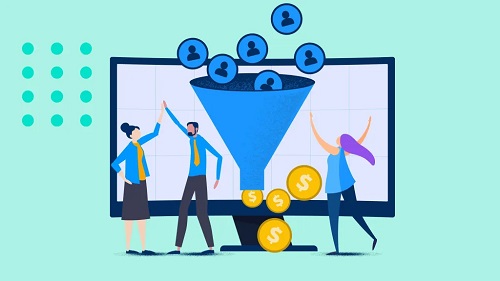
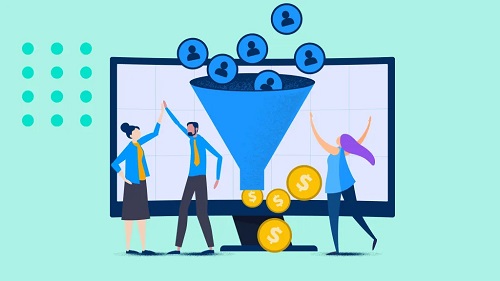
A sales funnel usually includes multiple stages, and each stage can create conversion problems.
A simplified funnel may look like:
Website Visitors → Leads → Qualified Leads → Sales Opportunities → Customers → Repeat Customers
If you have many visitors but very few leads, the problem could be your landing page, CTA, offer, or lead form.
If you have many leads but few sales, the problem could involve lead quality, pricing, follow-up, trust, or the sales process.
If you have many first-time customers but few repeat customers, your challenge may be customer satisfaction, retention, or post-purchase communication.
Analyzing each stage allows you to focus on the biggest problem instead of changing everything at once.
How to Increase Sales Conversion Rates With Customer Reviews?
Reviews can influence purchasing decisions because prospective customers often want to know about other people’s experiences.
Encourage satisfied customers to leave honest reviews. Make the process simple by providing a direct link or clear instructions.
Do not collect reviews only for the sake of having more stars. Look for detailed feedback that explains what customers appreciated.
A strong testimonial may mention the original problem, the customer’s experience, and the result they achieved.
Display reviews throughout the buying journey rather than hiding them on one page. Relevant testimonials can be particularly helpful on service pages, product pages, pricing pages, and checkout-related sections.
Improve Pricing Presentation and Perceived Value:
Some businesses assume their conversion problem is caused by high prices when the actual problem is weak value communication.
Customers compare price with perceived value. If they understand what they are getting and why it matters, they may be more comfortable paying a higher price.
Explain what is included in your product or service. Show outcomes where you can support them honestly. Compare packages clearly when multiple options exist.
A three-tier pricing structure can help customers understand the difference between basic and premium offerings.
You can also use upselling and cross-selling when relevant. For example, an online store selling laptops may offer an appropriate accessory, while a service provider may offer an additional service that complements the original purchase.
The key is relevance. Do not add unnecessary products simply to increase the transaction value.
Use Analytics to Find Conversion Problems:
Data is critical when learning how to increase sales conversion rates. Without measuring performance, it becomes difficult to understand what is helping or hurting sales.
Important metrics may include:
- Conversion Rate: Percentage of visitors or leads who complete the desired action.
- Bounce or Exit Behavior: Helps identify pages where visitors frequently leave.
- Cart Abandonment Rate: Shows how many shoppers begin purchasing but do not complete the transaction.
- Average Order Value: Shows the average amount customers spend per transaction.
- Customer Acquisition Cost: Estimates how much it costs to acquire a new customer.
- Lead-to-Customer Rate: Measures how many leads eventually become customers.
- Customer Lifetime Value: Estimates the value generated by a customer over time.
Do not focus on every available metric. Select KPIs directly related to your business objectives.
Retain Existing Customers to Generate More Sales:
Improving conversions is not only about acquiring new customers. Customer retention can create additional sales through repeat purchases, renewals, referrals, and upselling.
After someone purchases, continue providing value. Offer helpful onboarding, customer support, educational content, product recommendations, maintenance reminders, or relevant updates.
Ask customers for feedback and address problems quickly.
A satisfied customer can become one of your best marketing assets. They may purchase again, recommend your business to someone else, or leave a review that helps future customers make a decision.
This is why the post-purchase stage should be treated as part of the overall conversion strategy.
Common Mistakes That Reduce Conversion Rates:
Several common mistakes can negatively affect sales performance.
The first is trying to target everyone. A business with no clearly defined audience often creates generic messaging.
Another mistake is focusing too much on features and not enough on benefits. Customers want to know how the product or service can improve their situation.
Complicated websites can also reduce conversions. Too many pop-ups, unnecessary forms, excessive navigation options, and unclear CTAs can distract visitors.
Businesses should also avoid making changes without collecting data. A new website design may look better but perform worse. Testing and measurement help distinguish appearance from actual performance.
Finally, avoid misleading urgency and fake scarcity. Building long-term trust is more valuable than creating artificial pressure.
A Simple 30-Day Plan for How to Increase Sales Conversion Rates:
A practical action plan makes it easier to start improving conversions.
Week 1: Research Your Customers and Data
Review analytics, customer feedback, sales records, landing pages, product pages, and funnel performance. Identify where people are dropping out.
Week 2: Fix Major Conversion Problems
Improve headlines, value propositions, CTAs, forms, product descriptions, mobile usability, navigation, and trust signals.
Week 3: Strengthen Follow-Up and Customer Communication
Create an email follow-up process, respond quickly to leads, improve sales scripts, and develop useful content for common objections.
Week 4: Test and Measure
Select one or two high-priority improvements and use A/B testing where appropriate. Compare results and document what you learned.
After the first month, continue the process. Conversion optimization works best as an ongoing cycle rather than a one-time project.
Call to Action: Start Improving Your Sales Conversions Today
Learning how to increase sales conversion rates can transform the performance of a small business when strategies are applied consistently.
Start by identifying the most important conversion goal for your business. Review your current sales funnel, understand your customers, improve your offer, make your website easier to use, strengthen trust, simplify the buying process, and create a reliable follow-up system.
Do not try to optimize everything on the same day.
Choose one conversion problem, make one meaningful improvement, measure the result, and then move to the next opportunity.
Ready to turn more visitors and leads into customers? Start optimizing your conversion process today and build a sales system that grows with your business.
Closing Thoughts:
Learning how to increase sales conversion rates is not about finding one secret trick that instantly doubles revenue. It is about building a customer-focused system where every major part of the buying journey works together. Your message should attract the right audience, your offer should communicate clear value, your website should create confidence, and the path to purchase should be simple.
The most effective approach is to combine customer research with measurable optimization. Study what visitors are doing, listen to what customers are saying, identify friction, improve the weakest part of your funnel, and test important changes. A/B testing, analytics, customer reviews, email follow-up, landing page optimization, and retention strategies can all contribute to better sales performance when they are applied to the right problem.
Most importantly, conversion improvement should be ongoing. Customer expectations change, competitors introduce new offers, technology evolves, and buying behavior shifts. A business that consistently studies its customers and improves its sales process has a much better opportunity to turn traffic into leads, leads into customers, and customers into loyal long-term buyers.
FAQs About How to Increase Sales Conversion Rates:
What is the easiest way to increase sales conversion rates?
A good starting point is to identify the biggest problem in your sales funnel. Improving your value proposition, simplifying the buying process, adding stronger trust signals, and creating clearer CTAs can often provide useful opportunities for improvement.
What causes a low sales conversion rate?
A low conversion rate can result from poor targeting, weak messaging, an unclear offer, lack of trust, complicated forms, slow website performance, poor mobile usability, unexpected costs, ineffective follow-up, or an unsuitable sales process.
How can I improve my website conversion rate?
Improve the headline and value proposition, use clear CTAs, simplify navigation, optimize mobile performance, add genuine reviews and testimonials, answer common objections, improve page speed, and make the purchasing or inquiry process easy.
What is the difference between conversion rate and sales conversion rate?
A conversion can refer to many desired actions, such as an email signup or download. A sales conversion specifically focuses on turning a prospect or lead into a paying customer.
Does A/B testing really improve conversion rates?
A/B testing can help businesses determine which version of an element performs better. It is most useful when tests are based on a clear hypothesis and the results are measured correctly.
How important is customer retention for sales growth?
Customer retention can support repeat purchases, referrals, renewals, and upselling opportunities. Improving the experience after the first purchase can therefore contribute to long-term revenue growth.
Should small businesses focus on traffic or conversion optimization?
Businesses need both, but conversion optimization is especially valuable when existing traffic is not producing enough leads or sales. Improving the percentage of visitors who take meaningful action can increase results without requiring the same proportional increase in traffic.

Naeem Iqbal is the founder and lead writer at SmartWebCreator.org, a resource dedicated to helping aspiring entrepreneurs launch profitable small businesses on a budget of $1,000 or less. With a focus on practical, research-backed guidance, Naeem Iqbal researches real-world startup costs, regulatory requirements, and growth strategies across dozens of low-investment business models — from food service to home-based ventures.
Every guide on SmartWebCreator.org is written to help beginners avoid costly mistakes, understand legal requirements, and build a realistic path from idea to income — without needing a large upfront investment.
📧 Contact: webcreator2474@gmail.com
🌐 Website: smartwebcreator.org



Pingback: Best Sales Strategy for Small Businesses
Pingback: Small Business Goals Through X