
Profit and Loss Budget Statement in Small Business: Complete Guide
A Profit and Loss Budget Statement in Small Business is a financial planning document that estimates how much money a business expects to earn, spend, and potentially keep as profit during a specific period. It is commonly prepared monthly, quarterly, or annually and gives business owners a forward-looking picture of expected financial performance.
Unlike a traditional profit and loss statement, which records what has already happened, a profit and loss budget focuses on what the business expects to happen in the future. It allows owners to estimate sales revenue, operating expenses, cost of goods sold, and expected profit before the period begins.
For example, imagine a small online store expects $20,000 in monthly sales. The owner estimates $7,000 for inventory, $2,000 for marketing, $1,500 for salaries, $800 for software and other expenses, and $700 for miscellaneous costs. By putting these numbers into a budgeted P&L statement, the owner can estimate the expected profit.
This makes a profit and loss budget an important part of small business financial planning. Instead of making financial decisions based only on intuition, entrepreneurs can use realistic estimates to plan their operations.
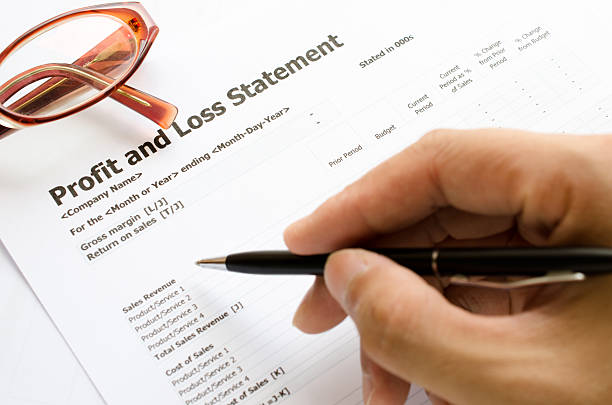
Why Profit and Loss Budget Statement in Small Business Matters:
A Profit and Loss Budget Statement in Small Business helps business owners understand whether their current business model is likely to generate a sustainable profit. It can also highlight potential problems before they become expensive.
A business might have strong sales but still struggle financially because its operating costs are too high. Similarly, a company may have modest revenue but generate healthy profits because it keeps expenses under control.
A budgeted P&L helps answer important questions such as:
- How much revenue do we expect?
- What will our products or services cost?
- How much will we spend on employees?
- How much should we allocate to marketing?
- What will our operating expenses be?
- How much profit can we reasonably expect?
- Are our prices high enough?
- Which expenses need better control?
These questions are central to effective small business budgeting.
Another advantage is that it gives owners a benchmark for measuring actual performance. At the end of the month, actual results can be compared with the original budget. If revenue or expenses are significantly different, the owner can investigate the reason and adjust future plans.
How to Create a Profit and Loss Budget Statement in Small Business:
Creating a Profit and Loss Budget Statement in Small Business does not have to be complicated. A spreadsheet can be enough for many small companies.
Step 1: Choose Your Budget Period
Decide whether you want a monthly, quarterly, or annual budget.
Monthly budgets are particularly useful for small businesses because they allow owners to identify problems quickly.
An annual budget can provide a broader view, while monthly budgets can provide greater control.
Step 2: Estimate Your Revenue
Start by estimating how much money the business expects to generate.
Look at:
- Previous sales
- Customer growth
- Pricing
- Seasonal trends
- Marketing plans
- Existing contracts
- Expected new customers
If your business is new and has no historical data, use conservative assumptions rather than highly optimistic projections.
Step 3: Calculate Direct Costs
Estimate the costs directly associated with delivering your products or services.
For a product business, this might include inventory and production.
For a service business, it could include contractor payments or project-specific expenses.
Step 4: Estimate Operating Expenses
Create a list of recurring and expected expenses.
Separate expenses into categories so you can identify where most of your money is going.
For example:
| Expense | Monthly Budget |
|---|---|
| Rent | $1,500 |
| Marketing | $1,000 |
| Software | $300 |
| Insurance | $250 |
| Utilities | $250 |
| Office Expenses | $200 |
| Other Costs | $500 |
This creates a clearer picture of your expected monthly financial requirements.
Step 5: Calculate Expected Profit
Once revenue and expenses have been estimated, calculate your expected profit.
For example:
- Revenue: $25,000
- COGS: $9,000
- Gross Profit: $16,000
- Operating Expenses: $10,000
- Expected Net Profit: $6,000
This information can help you determine whether your current business model is financially realistic.
Profit and Loss Budget Statement in Small Business: Example
Consider a small home-based digital marketing agency.
The owner expects the following monthly results:
| Category | Budgeted Amount |
|---|---|
| Service Revenue | $15,000 |
| Contractor Costs | $3,000 |
| Software | $500 |
| Advertising | $1,000 |
| Internet & Utilities | $300 |
| Office Expenses | $200 |
| Other Expenses | $500 |
The agency’s revenue is $15,000 and direct contractor costs are $3,000.
That produces a gross profit of $12,000.
After deducting the remaining $2,500 in operating expenses, the expected net profit would be approximately $9,500.
This simple example shows how a P&L statement for small business can provide a practical financial overview.
The owner can then ask whether the $9,500 expected profit is sufficient to support personal income, taxes, reinvestment, emergency reserves, and future growth.
Difference Between a Budgeted P&L and Actual P&L:
One common mistake among new business owners is confusing a budgeted profit and loss statement with an actual profit and loss statement.
A budgeted P&L estimates future financial performance.
An actual P&L reports financial performance based on transactions that have already occurred.
For example, you may budget $10,000 in monthly revenue but actually generate $12,000.
You may also budget $3,000 in marketing expenses but actually spend $2,500.
Comparing these figures creates useful information about business performance.
This is where financial forecasting for small business connects with financial reporting. Your previous budgets provide assumptions, while actual results provide evidence that can improve your next budget.
How to Use Profit and Loss Budget Statement in Small Business for Decision-Making:
A Profit and Loss Budget Statement in Small Business should not be treated as a document that is created and then forgotten.
Use it when making important decisions.
Pricing Decisions:
If your projected profit is too low, your prices may need to be reviewed.
You should consider product costs, labor, overhead, competitors, customer value, and desired profit margins.
Hiring Decisions:
Before hiring an employee, estimate the complete financial impact.
Consider salary, payroll taxes, benefits, equipment, software, and training.
Then determine whether expected additional revenue or productivity justifies the cost.
Marketing Decisions:
A budget can help determine how much you can realistically spend on marketing.
If your advertising budget is $2,000 per month, you can compare the expected customer acquisition and revenue with the investment.
Expansion Decisions:
Opening another location, purchasing equipment, or launching a new product requires careful financial planning.
A budgeted P&L can help estimate whether the business can absorb additional expenses.

Profit Margin and Profit and Loss Budgeting:
Profit margin is another important concept when preparing a profit and loss budget.
The net profit margin can be calculated as:
Net Profit Margin = Net Profit ÷ Revenue × 100
Suppose your business expects $10,000 in revenue and $2,000 in net profit.
The net profit margin would be 20%.
Tracking profit margins can be more useful than looking at revenue alone.
A company generating $100,000 in sales with a 5% profit margin may be less financially attractive than a business generating $50,000 with a 25% margin.
This is why small business owners should monitor both revenue growth and profitability.
Common Mistakes in Profit and Loss Budgeting:
Creating a Profit and Loss Budget Statement in Small Business is useful, but the quality of the results depends on the assumptions used.
Overestimating Revenue:
One of the biggest mistakes is assuming sales will automatically grow every month.
Use realistic sales forecasts based on evidence.
Underestimating Expenses:
Small costs can add up quickly.
Software subscriptions, transaction fees, repairs, shipping, taxes, and professional services should not be ignored.
Forgetting Seasonal Changes:
Some businesses have strong seasonal patterns.
A retailer may generate significantly more revenue during holidays, while another business may experience slower demand during certain months.
Mixing Personal and Business Expenses:
Personal expenses should generally be kept separate from business operating expenses.
Combining them makes financial reporting less accurate and makes it harder to understand actual business profitability.
Not Updating the Budget:
A budget should evolve when business conditions change.
If supplier prices increase significantly or sales patterns change, update your assumptions.
Profit and Loss Budget Statement in Small Business and Cash Flow:
Profitability does not always mean that a business has enough cash available.
A company can be profitable while experiencing cash flow problems.
For example, suppose you invoice a customer for $10,000 but the customer will not pay for 60 days. Your P&L may recognize revenue according to the accounting method being used, but the cash may not yet be available to pay current bills.
This is why small business cash flow management should be considered alongside profit and loss budgeting.
Monitor:
- Cash received
- Cash payments
- Accounts receivable
- Accounts payable
- Inventory
- Loan payments
- Taxes
- Emergency reserves
A strong financial plan considers both profitability and liquidity.
How Technology Can Simplify Profit and Loss Budgeting?
Small businesses can use spreadsheets, accounting platforms, budgeting tools, and financial dashboards to organize their financial information.
A simple spreadsheet can contain columns for:
- Budgeted revenue
- Actual revenue
- Budgeted expenses
- Actual expenses
- Variance
- Profit
- Profit margin
As the company grows, accounting software can reduce manual data entry and make financial reporting more efficient.
However, technology does not replace financial judgment. Business owners still need to understand the numbers and make decisions based on them.
How Often Should You Review Your Profit and Loss Budget?
For most small businesses, reviewing financial performance every month is a practical approach.
A monthly review allows you to compare:
Budget → Actual Results → Variance → Reason → Action
For example, if revenue is 15% below budget for two consecutive months, investigate the cause.
Maybe your advertising campaign is underperforming. Perhaps demand has changed. Your pricing may need adjustment, or a competitor may have entered the market.
Regular reviews turn your budget into a management tool instead of simply an accounting document.
Improving Your Profit and Loss Budget Over Time:
Your first budget will not necessarily be perfect.
The goal is to improve it using real business data.
At the end of each month, record:
- What was accurate?
- Which estimates were too high?
- Which expenses were underestimated?
- Which revenue sources performed well?
- Which costs increased?
- Which assumptions changed?
Over several months, you will build a more reliable understanding of your company’s financial behavior.
This process strengthens small business financial planning and makes future budgets more realistic.
Key Benefits of Profit and Loss Budget Statement in Small Business:
A well-prepared Profit and Loss Budget Statement in Small Business can provide several long-term benefits.
Better Financial Control:
You can identify where money is going and establish spending limits.
Improved Profitability:
Analyzing expected margins can reveal opportunities to increase prices or reduce unnecessary costs.
Smarter Business Decisions:
Financial projections give you information to evaluate hiring, marketing, expansion, and investment decisions.
Better Cash Planning:
Combining P&L budgeting with cash flow projections can help reduce unexpected financial pressure.
Easier Goal Setting:
You can establish measurable targets for revenue, expenses, and profit.
Early Problem Detection:
If expected profit begins declining, you can investigate the problem before it becomes more serious.
Simple Profit and Loss Budget Template:
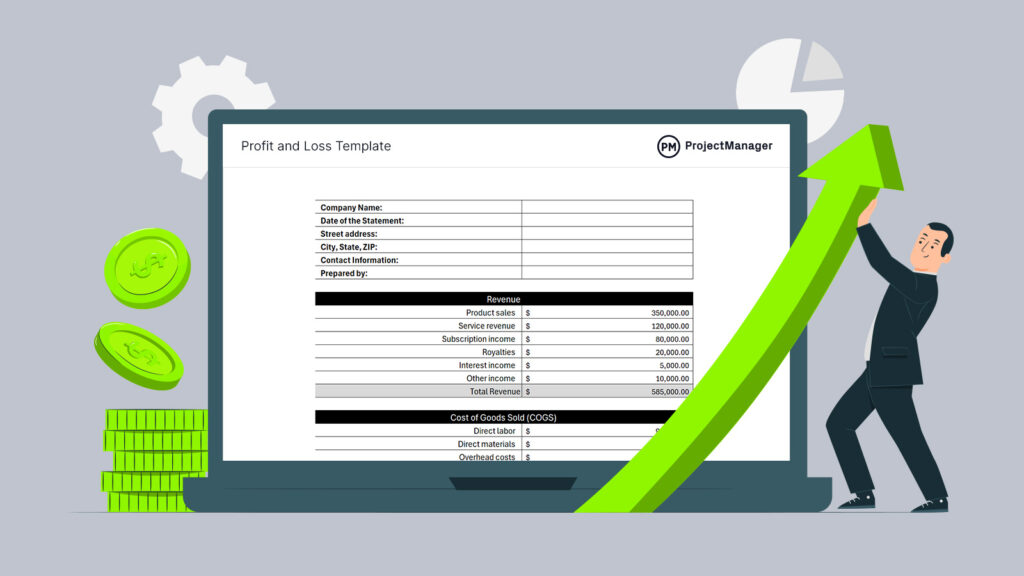
You can use the following structure to create your own budgeted profit and loss statement:
| P&L Category | Monthly Budget |
|---|---|
| Total Revenue | $_____ |
| Cost of Goods Sold | $_____ |
| Gross Profit | $_____ |
| Salaries/Wages | $_____ |
| Marketing | $_____ |
| Rent | $_____ |
| Utilities | $_____ |
| Software | $_____ |
| Insurance | $_____ |
| Transportation | $_____ |
| Other Expenses | $_____ |
| Total Operating Expenses | $_____ |
| Estimated Net Profit | $_____ |
| Net Profit Margin | _____% |
The template can be expanded based on the specific needs of your business.
Closing Thoughts:
A Profit and Loss Budget Statement in Small Business is one of the most useful tools for entrepreneurs who want greater control over their finances. It provides a realistic estimate of revenue, costs, expenses, and expected profit before financial decisions are made.
The real value of a budgeted P&L is not simply knowing whether you expect to make money. It is understanding why you expect to make money and which assumptions are responsible for that result.
Start with realistic revenue estimates, identify your direct and operating costs, calculate your expected profit, and review your numbers regularly. Then compare your budget with actual results and use what you learn to improve future financial plans.
Remember that successful small business budgeting is an ongoing process. Markets change, customer demand changes, costs change, and business priorities change. Your financial plan should change with them.
Take Control of Your Business Finances Today:
Don’t wait until the end of the year to discover that your expenses are higher than expected. Create your own Profit and Loss Budget Statement in Small Business today and start tracking revenue, expenses, profit margins, and financial goals.
Start small: prepare a monthly budget, compare it with your actual results, identify your biggest financial difference, and take one action to improve it. Consistent financial planning can help you make smarter decisions and build a more profitable and sustainable business.
FAQ About Profit and Loss Budget Statement in Small Business:
What is a Profit and Loss Budget Statement in Small Business?
A Profit and Loss Budget Statement in Small Business is a financial planning document that estimates future revenue, direct costs, operating expenses, and profit. It helps owners plan finances and evaluate expected business performance.
What is the difference between a P&L statement and a budgeted P&L?
A regular P&L statement generally reports actual financial results for a past or completed period. A budgeted P&L estimates expected revenue and expenses for a future period.
Why does a small business need a profit and loss budget?
A profit and loss budget helps businesses plan spending, estimate profitability, establish financial targets, manage expenses, and make better decisions about growth and investment.
How often should a small business prepare a profit and loss budget?
Many small businesses benefit from preparing an annual budget and reviewing it monthly. Businesses with rapidly changing revenue or expenses may need more frequent updates.
What should be included in a small business P&L budget?
A typical budget includes expected revenue, cost of goods sold, gross profit, operating expenses, and estimated net profit. Depending on the business, additional categories can be added.
Can I create a profit and loss budget in Excel?
Yes. Excel or another spreadsheet program can be used to create a basic P&L budget. You can include budgeted revenue, expenses, profit, actual results, and variance calculations.
Is profit the same as cash flow?
No. Profit measures financial performance, while cash flow tracks money entering and leaving the business. A profitable business can still experience cash shortages, so both should be monitored.

Naeem Iqbal is the founder and lead writer at SmartWebCreator.org, a resource dedicated to helping aspiring entrepreneurs launch profitable small businesses on a budget of $1,000 or less. With a focus on practical, research-backed guidance, Naeem Iqbal researches real-world startup costs, regulatory requirements, and growth strategies across dozens of low-investment business models — from food service to home-based ventures.
Every guide on SmartWebCreator.org is written to help beginners avoid costly mistakes, understand legal requirements, and build a realistic path from idea to income — without needing a large upfront investment.
📧 Contact: webcreator2474@gmail.com
🌐 Website: smartwebcreator.org



Pingback: Financial Planning For Small Business
Pingback: Small Business Expense Management