How to Start a Cleaning Business From Home With Under $500
Cleaning is one of the few businesses where the main tools are things most people already have: a vacuum, a few cloths, and a reliable work ethic. Demand is steady, clients often book weekly or fortnightly, and you can run the whole thing from your kitchen table. Cleaning Business From Home With Under $500
This guide explains how to start a cleaning business from home on a tight budget, with separate budgets, rules, and checklists for the US and the UK.
Quick Answer: US vs. UK at a Glance: Cleaning Business From Home With Under $500
| Topic | United States | United Kingdom |
|---|---|---|
| Realistic lean startup cost | About $400 to $500 | About £250 to £400 |
| Licence needed? | Usually a city or county business license | No licence needed for cleaning |
| Business registration | DBA or LLC (optional), EIN | Register as a sole trader with HMRC (free) |
| Insurance | General liability strongly recommended | Public liability strongly recommended |
| Typical hourly rate | $25 to $55 per hour | £12 to £20 per hour (sole trader) |
| Tax | Self-employment tax, estimated payments | Self Assessment, £1,000 trading allowance |
| Biggest budget risk | Insurance | Insurance (much cheaper in the UK) |
Can You Really Start a Cleaning Business for Under $500?
Yes, but be honest about what that means. Many guides quote startup costs of $2,000 to $10,000 for cleaning businesses, but those figures usually include a vehicle, a larger equipment stock, marketing, and hiring a team. A solo, home-based operation with a lean setup costs far less.
In the UK, the accounting platform Xero says you can start a domestic cleaning business for under £500, and 1st Formations’ 2026 guide agrees that you can launch for under £500, or considerably less if you already own basic equipment.
The one cost that can blow a US budget is insurance. Homebase estimates general liability insurance at about $48 per month, or $580 per year, so the lean plan below pays monthly rather than annually.
What Services Should You Start With? Cleaning Business From Home With Under $500
Start with residential cleaning. It has the lowest startup cost, needs no premises, and brings recurring revenue. Commercial cleaning (offices, shops) can pay well, but it often needs more equipment, insurance, and contracts.
Good beginner services:
- Regular house cleaning (weekly, fortnightly, or monthly)
- One-time deep cleans
- Move-in and move-out cleaning
- Kitchen and bathroom refreshes
- Airbnb or holiday-let turnovers
Pick two or three services you can do really well. A clear, short menu makes pricing and marketing easier.
How Much Does It Cost? Sample Budgets: Cleaning Business From Home With Under $500
US Budget: About $430
| Item | Estimated cost |
|---|---|
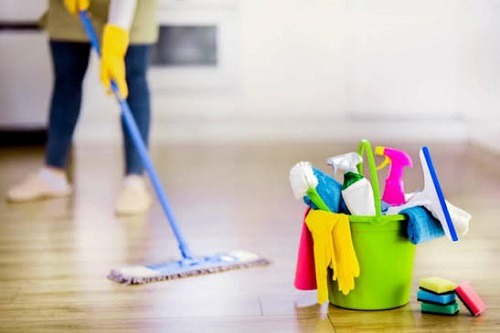
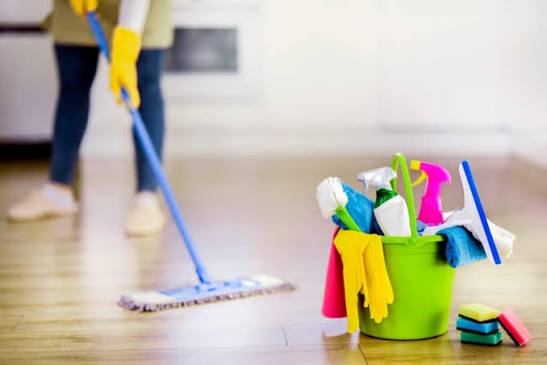
| Starter supplies and caddy (cloths, cleaners, sponges, brushes, gloves, mop and bucket) | $120 |
| Used vacuum (skip if you already own one) | $60 |
| Business license and DBA registration | $100 |
| General liability insurance, first month | $48 |
| Business cards, flyers, free online listings | $40 |
| Gas, supplies refill, and small contingency | $60 |
| Total | about $428 |
Note: A general business license often costs somewhere between $50 and $400 depending on the city, with one 2026 guide putting it at $100 to $200 per year. Some cities also require a home occupation permit.
UK Budget: About £290
| Item | Estimated cost |
|---|---|
| Starter supplies and caddy | £80 |
| Second-hand vacuum (skip if you already own one) | £40 |
| Public liability insurance (annual) | £80 |
| Business registration as a sole trader | £0 |
| Basic DBS check (optional but often requested) | £18 |
| Flyers, cards, and online listings | £30 |
| Travel and contingency | £40 |
| Total | about £288 |
Note: UK public liability insurance for a small cleaner is commonly quoted at £50 to £150 per year, and a basic DBS check costs about £18.
Ways to Keep Costs Low
- Use your own vacuum, mop, and cloths for the first jobs.
- Buy supplies in multipacks and refill bottles with concentrates.
- Ask clients if you may use their vacuum for the first few jobs, if they’re comfortable with that.
- Buy a second-hand vacuum from a charity shop or marketplace.
- Skip a website at first. A free Google Business Profile and social posts are enough.
- Use free invoicing and bookkeeping tools.
Do You Need a License to Start a Cleaning Business?
In the US
Rules vary by city and state. Common requirements include:
- A general business license from your city or county, often $50 to $400 depending on location
- A DBA if you operate under a name other than your own
- A home occupation permit in some cities if you run the business from your residence
- An EIN (free from the IRS), which is optional for sole proprietors but keeps your Social Security number private
- Sales tax registration, since some states tax cleaning services and others don’t
A cleaning business usually does not need a special trade license, but always check your city and state. If you’re thinking about forming an LLC, read our guide on whether you need an LLC for a small business before you spend money on one.
In the UK: Cleaning Business From Home With Under $500
No License is required to start a cleaning business in the UK. According to 1st Formations’ 2026 guide, you need to register your business before taking on paying clients, and the simplest route is as a sole trader, which is free to register with HMRC. Limited companies register with Companies House and cost more.
DBS checks are not legally required for domestic cleaning, but clients increasingly expect them.
What Insurance Does a Cleaning Business Need?
Accidents happen: a broken vase, a stained carpet, a client who slips on a wet floor. Insurance protects your savings.
In the US: Cleaning Business From Home With Under $500
General liability insurance covers property damage and bodily injury claims from your work. Costs vary widely. Homebase estimates about $48 per month, Bean-count cites $100 to $500 per year for some small operators, and Startup-Owl puts it at $500 to $1,500 per year. Get several quotes and compare coverage, not just price.
Other coverage to consider:
- Bonding (optional): Some clients, especially commercial ones, like it because it protects against theft claims.
- Commercial auto insurance if you drive between jobs in a vehicle used for the business.
- Workers’ compensation once you hire help.
Read our guides on small business liability insurance in the USA and whether a home-based business needs liability insurance. If a landlord or commercial client asks for proof, see how to get a certificate of insurance.
In the UK: Cleaning Business From Home With Under $500
Trade2base says public liability insurance of at least £2 million is the baseline for cleaners, while employers’ liability insurance of at least £5 million is a legal requirement if you hire employees or subcontractors. Public liability isn’t a legal requirement for sole traders, but many clients expect it. Also note that ordinary commuting car insurance doesn’t cover business driving, so check your motor policy if you drive to jobs.
How Much Should You Charge?
Pricing varies by city, home size, and service type. Common 2026 ranges:
United States
- StartupOwl lists residential cleaning at about $25 to $55 per hour or $100 to $300 per job.
- Other guides cite $30 to $60 per hour, and some markets go higher.
United Kingdom
- Trade2base reports about £12 to £20 per hour for a sole trader, and £18 to £30 per hour for a business with staff and overheads.
A simple pricing formula:
(Hourly rate × estimated time) + supplies + travel cost + profit margin
Pricing tips:
- Start with hourly pricing for your first 10 clients to learn how long jobs really take, then move to flat rates.
- Set a minimum visit fee so small jobs don’t waste your day.
- Charge extra for ovens, fridges, inside windows, and heavy build-up.
- Offer a small discount for weekly bookings. Recurring clients are the foundation of a stable income.
- Don’t underprice. Very low rates tend to attract unreliable clients and make it hard to cover costs.
Before you finalize your prices, check your local market with the free market research tools for startups we reviewed.
US Checklist: Start a Cleaning Business From Home
☐ Decide your services (residential, move-out, Airbnb)
☐ Research local rates by calling or checking 3 competitors
☐ Choose a business name and check it isn’t taken
☐ Register a DBA if you use a business name
☐ Get a city or county business license
☐ Check if your city requires a home occupation permit
☐ Apply for a free EIN from the IRS (optional for sole proprietors)
☐ Open a separate business bank account
☐ Get quotes and buy general liability insurance (monthly payment if needed)
☐ Buy starter supplies and a caddy
☐ Check your state’s sales tax rules for cleaning services
UK Checklist: Start a Cleaning Business From Home
☐ Decide your services (domestic, end of tenancy, holiday let)
☐ Confirm you have the right to work in the UK
☐ Research local hourly rates
☐ Register as a sole trader with HMRC (free)
☐ Keep records of income and expenses from day one
☐ Check the £1,000 trading allowance and whether you must file Self Assessment
☐ Buy public liability insurance (at least £2 million cover)
☐ Consider a basic DBS check (about £18)
☐ Check your car insurance covers business use
☐ Buy starter supplies and a caddy
☐ Check if you handle client data digitally and whether any data protection steps apply
☐ Set your hourly rate and minimum visit fee
☐ Open a separate business bank account
☐ Create a Google Business Profile
☐ Post in local Facebook and Next-door groups
☐ Ask satisfied clients for reviews and referrals
☐ Plan for tax: keep receipts and set money aside
How Do You Run a Cleaning Business From Home?
Working from home is mostly about organization.
- Set up a small “base.” A shelf or a caddy for supplies, a folder for invoices, and a calendar for bookings.
- Keep business and personal finances separate.
- Use a simple checklist for each type of clean so every client gets consistent results.
- Keep a schedule and cluster jobs near each other to save travel time.
- Never mix cleaning chemicals. Combining bleach with ammonia-based products, for example, can create dangerous fumes. Read labels and ventilate rooms.
- Wear gloves and protect your back. Cleaning is physical work.
- Protect client privacy if you hold keys, door codes, or addresses. Store them securely.
- Use a written agreement that covers what’s included, cancellation terms, and payment.
How Do Taxes Work? Cleaning Business From Home With Under $500
In the US: You’ll owe income tax plus self-employment tax on net profit, and you may need to make quarterly estimated payments. Keep receipts for supplies, insurance, and business mileage. If you ever overpay or need to correct a return, our tax refund process guide explains how.
In the UK: UK Tax Calculators notes that the £1,000 trading allowance applies to gross self-employment income, and Self Assessment may be needed if your income exceeds it. The VAT registration threshold is £90,000. Keep clear records, and check gov.uk for the current rules and deadlines.
How Fast Can You Earn Back Your Startup Costs?
Here’s a simple planning example, not a guarantee.
US example: Startup cost about $430. You charge $35 per hour, and a typical clean takes 3 hours, so each job is about $105. After supplies and travel, you might keep around $90 per job. About 5 jobs could cover your startup costs.
UK example: Startup cost about £290. You charge £15 per hour for a 3-hour clean, so each job is £45. After supplies, you might keep around £38. About 8 jobs could cover your startup costs.
Actual results depend on your area, your pace, and how quickly you find clients. If you land four weekly clients, that’s a steady base to build on.
Common Mistakes to Avoid:
- Skipping insurance. One damaged item can cost more than a year of premiums.
- Underpricing to win clients, then burning out.
- Not tracking time. You can’t price well if you don’t know how long jobs take.
- Mixing personal and business money.
- Ignoring local rules like business licenses, permits, or tax registration.
- Taking on too much too fast, such as big commercial contracts before you have systems.
- No written agreement, which leads to disputes about scope and payment.
- Buying expensive equipment first. Start with what you have and upgrade from profit.
Final Thoughts:
Starting a cleaning business from home for under $500 (or £500) is realistic when you start lean: use the tools you already have, buy only the basics, get insured, and price fairly. The US and UK paths differ mostly in registration and insurance costs, but the fundamentals are the same: show up on time, do consistent work, and ask for referrals.
Start small, keep your costs low, and build a base of recurring clients. A few steady weekly bookings can grow into a dependable business.
Take Action Today:
Pick your country’s checklist and complete the first three boxes this week. Call or check three local cleaners for prices, get quotes for liability insurance, and register your business name or sole trader status. Then post your services in one local group and book your first client. Save this guide so you can tick off the rest as you go.
Experience and Expertise:
Why you can trust this guide: I’ve been writing about business and personal finance for three years, and this site focuses on practical small business ideas you can start on a small budget. I build these guides from current cost data, official registration rules, and small business resources, and I flag where numbers change by country, state, or city. This guide is for general education and is not legal, tax, or financial advice.
Sources and Further Reading:
United States:
Homebase, How to Start a Cleaning Business (2026): https://www.joinhomebase.com/blog/how-to-start-a-cleaning-business
- StartupOwl, How to Start a Cleaning Business: https://startupowl.com/start/how-to-start-a-cleaning-business
- IRS, Employer ID Numbers (EIN): https://www.irs.gov/businesses/small-businesses-self-employed/employer-id-numbers
- IRS, Self-Employed Individuals Tax Center: https://www.irs.gov/businesses/small-businesses-self-employed/self-employed-individuals-tax-center
- Your city or county business license office and state department of revenue
United Kingdom:
- Xero UK, How to start a cleaning business: https://www.xero.com/uk/guides/how-to-start-a-cleaning-business/
- 1st Formations, How to start a cleaning business in the UK: https://www.1stformations.co.uk/resources/how-to-start-cleaning-business-uk/
- Trade2base, How to Start a Cleaning Business in the UK: https://www.trade2base.com/blog/how-to-start-cleaning-business-uk
- UKTaxCalculators, Domestic cleaning: https://www.uktaxcalculators.co.uk/side-hustles/domestic-cleaning/
- GOV.UK, Set up as a sole trader: https://www.gov.uk/set-up-sole-trader
Transparency Note:
This article is for general information only. I have no financial relationship with any insurer, supplier, or service mentioned. [Agar affiliate links hon to likhein: “Some links may be affiliate links.”] Prices and rules vary by location, so confirm details locally.
How this guide was prepared:
This guide is based on 2026 cleaning business startup guides, UK government and accounting resources, and US small business sources. Costs and rules vary by city, state, and country, so confirm local requirements before you start. This article is for general education and is not legal, tax, or financial advice.
Frequently Asked Questions:
Can I start a cleaning business with no money?
You can start very cheaply by using your own supplies and equipment and getting your first clients through word of mouth. You’ll still want insurance and basic registration soon after.
Do I need a license to start a cleaning business?
In the US, you usually need a city or county business license. In the UK, no licence is required for cleaning, but you should register as a sole trader with HMRC.
Do I need insurance as a house cleaner?
It isn’t always legally required for sole traders, but it’s strongly recommended, and many clients ask for it. In the UK, employers’ liability insurance is a legal requirement once you hire staff.
How much should a beginner charge?
In the US, roughly $25 to $55 per hour is a common range. In the UK, sole traders commonly charge about £12 to £20 per hour. Check your local market.
Should I do residential or commercial cleaning first?
Residential cleaning has lower startup costs and faster client acquisition, so most beginners start there.
Do I need an LLC or limited company?
Not at the start. Many owners begin as sole proprietors or sole traders and form a company later as income and risk grow.
Do I need DBS checks in the UK?
They aren’t legally required for domestic cleaning, but clients increasingly expect them, and a basic check costs about £18.
How many clients do I need to make a living?
It depends on your rates and hours. A handful of recurring weekly clients is a solid starting base, and you can build from there.

Author is the founder and lead writer at SmartWebCreator.org, a resource dedicated to helping aspiring entrepreneurs launch profitable small businesses on a budget of $1,000 or less. With a focus on practical, research-backed guidance, Naeem Iqbal researches real-world startup costs, regulatory requirements, and growth strategies across dozens of low-investment business models — from food service to home-based ventures.
Every guide on SmartWebCreator.org is written to help beginners avoid costly mistakes, understand legal requirements, and build a realistic path from idea to income — without needing a large upfront investment.
📧 Contact: webcreator2474@gmail.com
🌐 Website: smartwebcreator.org